Cracks & Failed Joints
Create a continuous liner through qualifying cracked or deteriorated pipe sections, reducing dependence on the original joints for structural continuity.


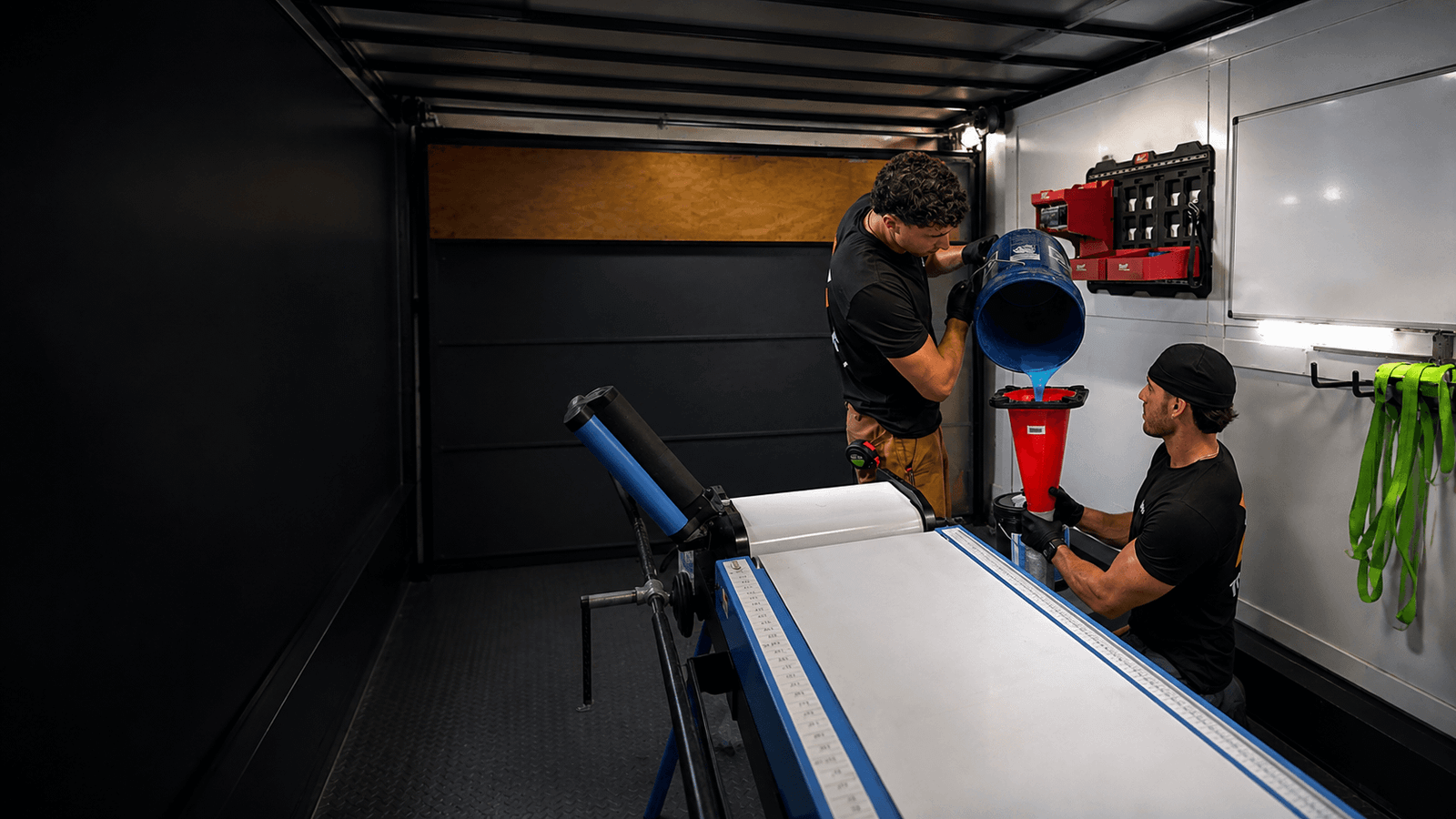
TrenchX rehabilitates qualifying damaged sewer, storm, and pipeline systems with cured-in-place pipe lining, creating a structural new pipe within the existing line while reducing the need for continuous excavation along the run.
CIPP lining in Charleston, SC rehabilitates qualifying damaged pipe from the inside. A flexible liner is saturated with resin, inserted through an existing or planned access point, positioned against the host pipe wall, and cured to form a continuous structural liner.
Because the rehabilitation takes place inside the existing alignment, CIPP can reduce the amount of surface excavation required across pavement, landscaping, finished interiors, drives, buildings, and other developed areas. The host pipe still has to be inspected, cleaned, and properly prepared before installation begins.
TrenchX can pair sewer inspections with hydro-jetting and pipeline cleaning to document and prepare the pipe before lining. Depending on the liner system and project requirements, UV curing or another controlled curing method may be used to complete the installation.
CIPP can be considered for qualifying sewer laterals, mains, stormwater systems, commercial pipe networks, and other buried pipe where structural rehabilitation fits the documented condition, access, geometry, and project requirements.
Schedule a CIPP InspectionCIPP suitability depends on host-pipe condition, diameter, geometry, access, material, defects, and the structural requirements of the project. Inspection determines whether lining is the right method.
Create a continuous liner through qualifying cracked or deteriorated pipe sections, reducing dependence on the original joints for structural continuity.
Remove qualifying root intrusion, prepare the host pipe, and line through joints or defects that previously allowed roots into the system.
Explore Root Removal →Rehabilitate qualifying older clay, cast iron, concrete, and other host-pipe systems where deterioration exists but the alignment can support structural lining.
Apply CIPP to qualifying residential, commercial, institutional, and larger sewer systems according to diameter, access, condition, and project design.
Structurally rehabilitate qualifying stormwater and drainage systems where pipe deterioration is affecting reliability, infiltration, or long-term performance.
Use full-length CIPP where a longer section requires renewal, or evaluate patch lining when the structural problem is isolated to a smaller portion of the pipe.
Explore Patch Lining →Document pipe condition, remove qualifying buildup and roots, and prepare the host pipe for structural liner installation.
Position the resin-saturated liner against the host pipe wall using an installation method suited to the pipe and project.
Complete the controlled cure, reopen the line as required, and inspect the finished liner to document the completed rehabilitation.
CIPP is powerful because it can structurally rehabilitate qualifying pipe while using the existing line as the pathway for the new liner. That can preserve pavement, landscaping, finished surfaces, and other property improvements that open-cut replacement could disturb.
But lining still depends on having a host-pipe configuration that can accept the rehabilitation. Severe collapse, major deformation, missing pipe, certain alignment failures, or other structural conditions may require a different solution.
When full-length lining is unnecessary, TrenchX can evaluate patch lining for isolated defects. When the pipe needs replacement rather than rehabilitation, pipe bursting may provide a trenchless replacement path through the established alignment.
Compare TrenchX Pipe SolutionsTrenchX provides qualifying pipe inspection, preparation, CIPP lining, and trenchless rehabilitation services across Charleston and surrounding South Carolina Lowcountry communities.
Cured-in-place pipe lining creates a structural liner within a qualifying existing pipe rather than replacing the entire line by continuous excavation.
The host pipe still has to be inspected, cleaned, prepared, and evaluated to determine whether CIPP is appropriate for the condition and project.
These questions explain how TrenchX approaches CIPP lining in Charleston, SC and surrounding Lowcountry communities.
Cured-in-place pipe lining uses a resin-saturated flexible liner installed inside an existing pipe. The liner is positioned against the host pipe wall and cured to form a continuous structural pipe within the existing alignment.
CIPP can substantially reduce the need for continuous excavation along a pipe route. Access is still required, and the amount and location of that access depend on the system configuration, project conditions, and installation method.
CIPP can rehabilitate certain cracks, failed joints, root-entry locations, deterioration, corrosion-related damage, and other structural conditions where the existing pipe remains suitable for lining.
Yes. Qualifying buildup, roots, scale, debris, and other material generally need to be removed so the host pipe can be inspected and properly prepared before liner installation.
Severe collapse, major deformation, missing pipe, alignment problems, or other conditions may make CIPP inappropriate. TrenchX can evaluate alternatives such as targeted repair or pipe bursting according to the documented condition.
TrenchX provides qualifying CIPP lining and trenchless pipe rehabilitation across Charleston and surrounding South Carolina Lowcountry communities. Visit the TrenchX service-area directory for county and community coverage information.