Cracks & Structural Defects
Document visible cracking, fractures, deformation, material loss, and other conditions that may affect structural performance.


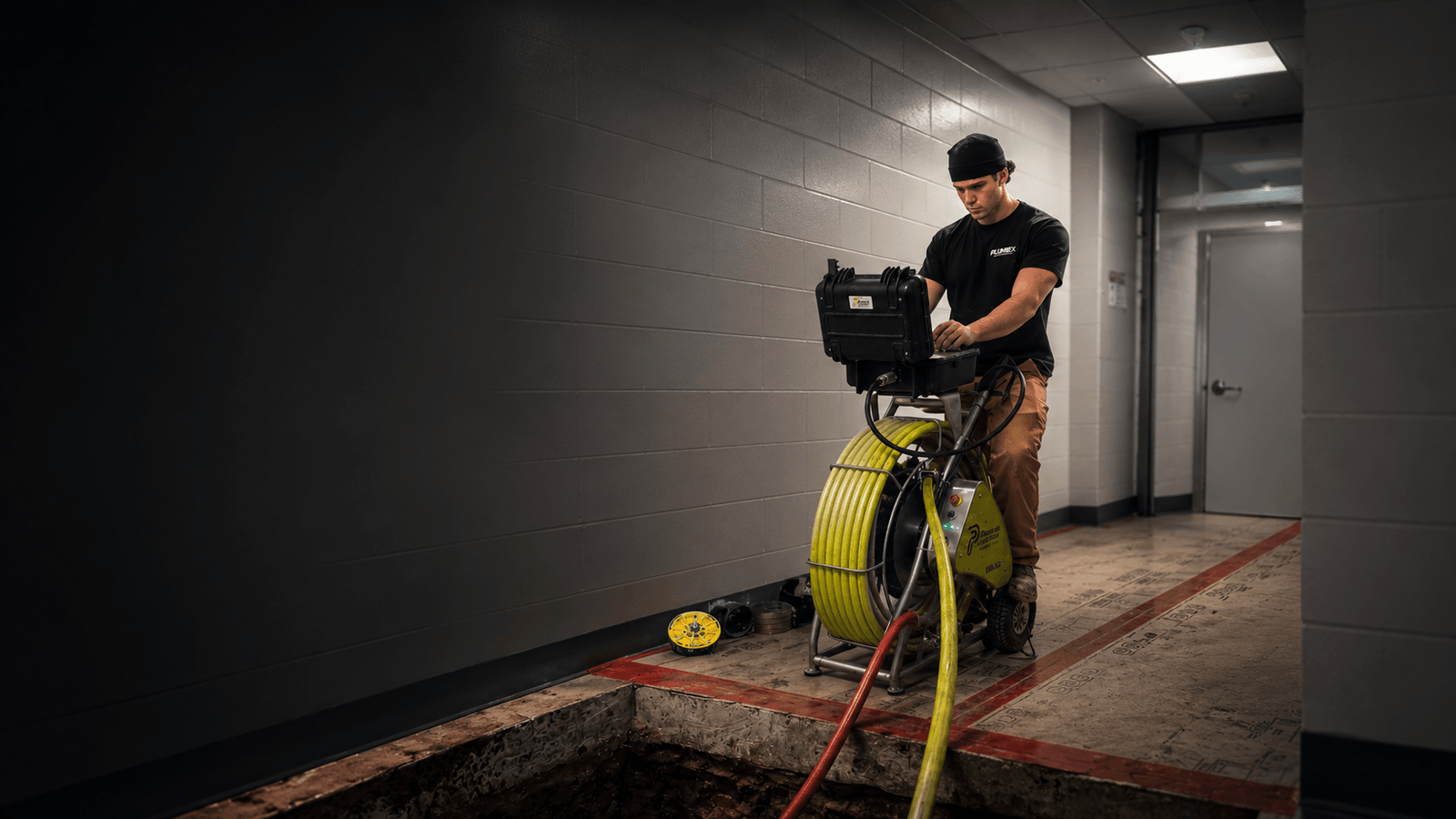
TrenchX documents qualifying sanitary sewer systems with detailed camera inspection, defect identification, condition reporting, and location data that can support maintenance, rehabilitation, and long-term infrastructure planning.
Sanitary sewer inspections in Charleston, SC give owners, facilities teams, and infrastructure managers a documented view of qualifying underground sewer conditions before maintenance, rehabilitation, or replacement decisions are made. Camera equipment can travel through sewer mains and laterals while recording visible defects and their location along the inspected run.
Inspection can document pipe material, diameter, cracking, joint separation, offsets, deformation, root intrusion, grease, sediment, infiltration indicators, obstructions, and other conditions that may affect flow or structural performance. For larger sewer networks, those findings can also support maintenance scheduling, rehabilitation priorities, project scoping, and longer-term infrastructure planning.
Where buildup limits visibility, hydro-jetting and pipeline cleaning may be needed before the system can be properly evaluated. Inspection findings can then help determine whether qualifying structural defects should be considered for CIPP lining , localized repair, or another rehabilitation approach.
Schedule a Sewer InspectionA sanitary sewer inspection is valuable because it replaces guesswork with documented conditions. Location, severity, geometry, access, and defect type all help determine what the system needs next.
Document visible cracking, fractures, deformation, material loss, and other conditions that may affect structural performance.
Identify qualifying offsets, open joints, separated connections, alignment changes, and other conditions that can affect the line.
Locate root intrusion, grease, sediment, debris, and other restrictions that reduce usable pipe area or obscure condition.
Record distance references, connections, changes in direction, diameter, and other physical characteristics relevant to planning.
When roots restrict the pipe, removal and follow-up evaluation can help determine whether the entry point also requires repair.
Explore Root Removal → 06Use documented structural findings to evaluate whether qualifying pipe should be lined, repaired locally, or replaced.
Explore CIPP Lining →Enter the qualifying sewer system through planned access and document visible conditions throughout the inspection run.
Log defect type, location, severity, geometry, restrictions, and other observations that influence system condition.
Use the inspection record to organize cleaning, maintenance, rehabilitation, replacement, and future monitoring priorities.
Sewer systems are often inspected after a backup, restriction, or other visible problem. That reactive inspection can be important, but it only documents the system after an operational issue has already brought attention to the line.
Planned inspection programs create a different type of record. Comparing condition over time can help owners and infrastructure teams identify recurring restrictions, developing defects, sections with repeated maintenance needs, and assets that deserve earlier rehabilitation planning.
When an inspection identifies qualifying restrictions, TrenchX can evaluate hydro-jetting for cleaning. Structural defects may lead to CIPP lining , while isolated defects may be considered for patch lining where the surrounding pipe remains serviceable.
Compare TrenchX Pipe SolutionsSanitary sewer systems serving larger properties and facilities are rarely isolated assets. Mains, laterals, manholes, building connections, grease-producing areas, high-use restrooms, and other parts of the network can interact with one another when restrictions or structural defects develop.
A condition-based inspection program can help teams organize work across that larger system. Findings can support maintenance scheduling, rehabilitation priorities, budget planning, project sequencing, contractor coordination, and decisions about which assets require immediate attention and which can continue to be monitored.
TrenchX can evaluate qualifying sanitary sewer inspection needs for facilities , hospital campuses , and managed properties where multiple sewer assets, occupied areas, access requirements, recurring maintenance, and long-term infrastructure priorities need to be coordinated as part of one operating system.
TrenchX evaluates qualifying sanitary sewer inspection, condition assessment, cleaning, maintenance, and trenchless rehabilitation needs across Charleston and surrounding South Carolina Lowcountry communities.
Sanitary sewer inspections document qualifying pipe condition before maintenance, rehabilitation, or replacement decisions are made.
Inspection can identify visible defects, restrictions, alignment issues, structural concerns, and areas that require further evaluation.
These questions explain how TrenchX approaches sanitary sewer inspections in Charleston, SC and surrounding Lowcountry communities.
A sanitary sewer inspection uses camera equipment and related condition-assessment methods to document qualifying underground sewer pipe, visible defects, restrictions, connections, and system condition.
Depending on visibility and access, inspection may document cracking, joint separation, offsets, root intrusion, grease, sediment, deformation, obstructions, connections, and other visible conditions.
Cleaning may be appropriate where grease, sediment, roots, debris, or other restrictions prevent the camera from adequately documenting the host pipe condition.
Yes. Inspection helps determine defect location, structural condition, geometry, access, and other factors used to evaluate CIPP lining, patch lining, replacement, or other rehabilitation methods.
Yes. Recurring inspection can help property and infrastructure teams compare condition over time, monitor known issues, plan maintenance, and prioritize future rehabilitation work.
TrenchX evaluates qualifying sanitary sewer inspection projects across Charleston and surrounding South Carolina Lowcountry communities. Visit the TrenchX service-area directory for county and community coverage information.