Cracks & Pipe Defects
Document visible cracking, deterioration, joint problems, deformation, and other defects that may influence rehabilitation or replacement planning.


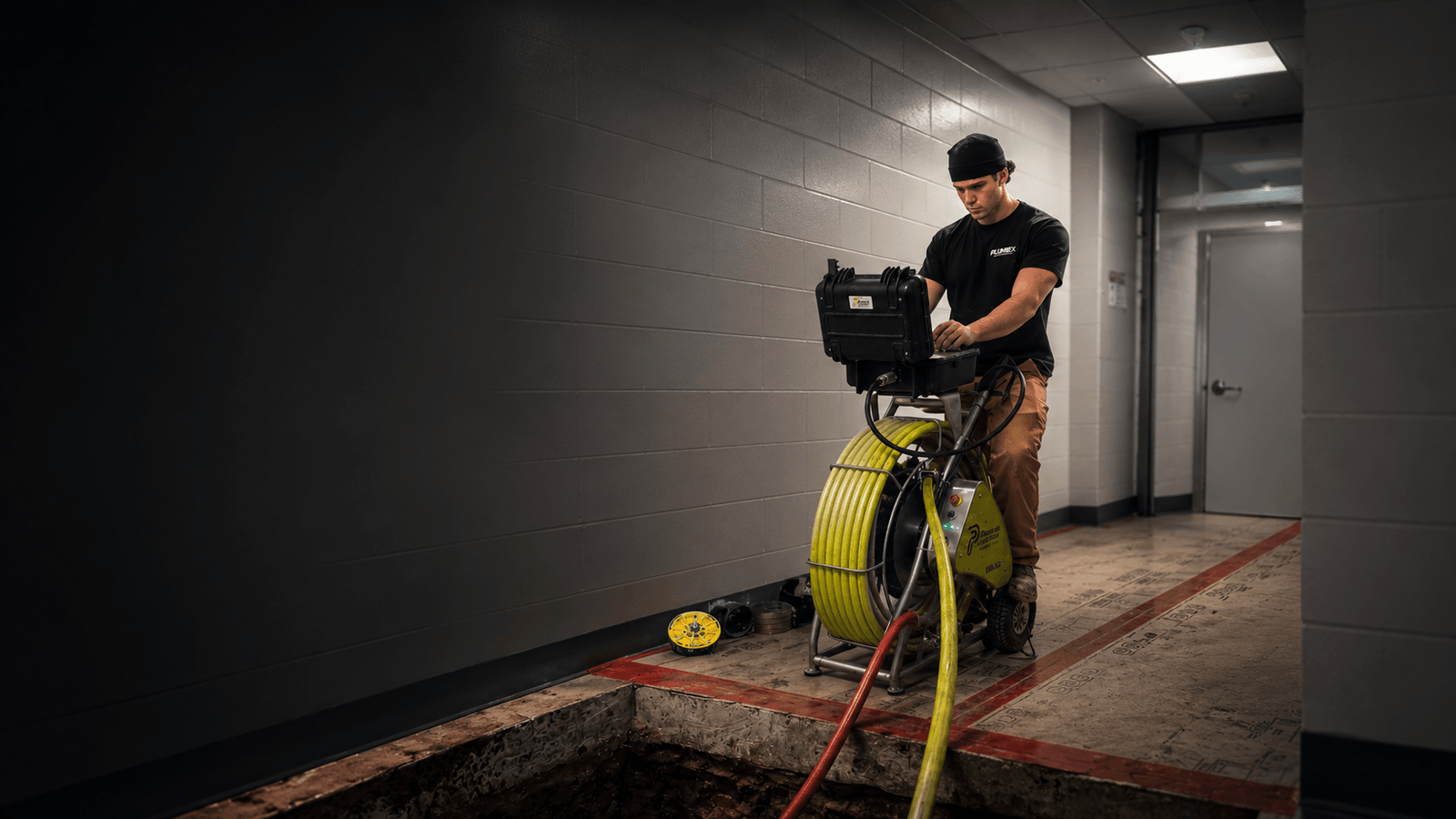
TrenchX uses professional CCTV inspection and pipe-assessment equipment to document roots, buildup, defects, offsets, and other visible underground conditions before cleaning, rehabilitation, or replacement decisions are made.
Sewer camera inspection in Charleston, SC gives TrenchX a direct view of qualifying underground pipe conditions before cleaning, rehabilitation, or replacement begins. CCTV equipment can travel through sewer mains, storm systems, and service laterals while documenting the location and character of visible defects.
Inspection can reveal root intrusion, grease and sediment buildup, cracking, joint separation, offsets, deformation, obstructions, and other conditions that may affect flow or structural performance. Distance references help connect what appears on camera with the portion of the underground system that needs attention.
Where standing water or submerged conditions limit camera visibility, additional assessment methods such as sonar can help characterize portions of the pipe below the waterline. Inspection findings can also determine whether hydro-jetting and pipeline cleaning should occur before a pipe is evaluated for CIPP lining or another rehabilitation method.
Sewer inspections support repair planning across managed properties , facilities , and multi-residential properties where access, budgets, occupied spaces, and continued property use all need to be considered.
Schedule a Sewer InspectionA useful inspection does more than capture video. It helps document pipe condition, restrictions, defect location, and the information needed to make a better cleaning or repair decision.
Document visible cracking, deterioration, joint problems, deformation, and other defects that may influence rehabilitation or replacement planning.
Identify qualifying root entry and document where vegetation has entered through joints, cracks, or other openings in the pipe system.
Explore Root Removal → 03Identify grease, sediment, debris, scale, and other restrictions that may need to be removed before further evaluation or rehabilitation.
Explore Hydro-Jetting →Document offsets, separated joints, alignment changes, and deformation that can affect flow and the feasibility of certain trenchless repair methods.
Evaluate where standing water limits camera visibility and determine whether additional assessment methods may be useful for the project.
Turn documented conditions into a focused next step instead of selecting a trenchless repair method before the underground problem is understood.
Identify the line, available access points, pipe configuration, flow conditions, and the portion of the underground system that needs to be evaluated.
Record visible defects, restrictions, joints, deformation, buildup, and distance information that can influence the repair decision.
Determine whether the documented condition points toward cleaning, monitoring, localized repair, structural rehabilitation, or pipe replacement.
A sewer inspection documents conditions inside the pipe. It does not automatically mean the system needs lining, bursting, cleaning, or replacement. The repair decision should follow the documented condition rather than come before it.
Some systems primarily contain grease, sediment, roots, or other restrictions that may need cleaning. Others show isolated defects, widespread structural deterioration, or failure that requires a different rehabilitation strategy.
When inspection identifies qualifying defects, TrenchX can evaluate root removal for intrusive roots, patch lining for certain isolated defects, CIPP lining for qualifying structural rehabilitation, or pipe bursting when replacement is more appropriate.
Compare TrenchX Pipe SolutionsTrenchX provides qualifying sewer camera inspection and underground pipe condition assessment across Charleston and surrounding South Carolina Lowcountry communities.
Sewer camera inspection documents visible underground pipe conditions before cleaning, repair, rehabilitation, or replacement decisions are made.
The inspection scope depends on pipe access, diameter, configuration, flow conditions, visibility, and the portion of the system that needs to be evaluated.
These questions explain how TrenchX approaches sewer inspections in Charleston, SC and surrounding Lowcountry communities.
Camera inspection can document visible cracking, root intrusion, buildup, joint separation, offsets, deformation, obstructions, and other conditions inside accessible portions of a sewer or pipeline system.
Inspection can provide useful evidence about pipe condition and defect location before a repair method is selected. That helps distinguish cleaning needs from localized defects, structural deterioration, or complete pipe failure.
Camera visibility can be limited in partially or fully submerged pipe. Depending on the project and available equipment, additional assessment methods such as sonar may help characterize conditions below the waterline.
It depends on the condition of the line and the purpose of the inspection. Heavy grease, sediment, roots, or debris can limit visibility, so hydro-jetting or another cleaning method may be appropriate before a detailed post-cleaning assessment.
Yes. Inspection findings can help determine whether a qualifying system may need cleaning, root removal, patch lining, CIPP rehabilitation, pipe bursting, or another repair strategy.
TrenchX provides qualifying sewer camera inspection and underground pipe assessment across Charleston and surrounding South Carolina Lowcountry communities. Visit the TrenchX service-area directory for county and community coverage information.