Pipes With Bends
Use pressure-driven installation to help position qualifying liners through pipe configurations that contain changes in direction.


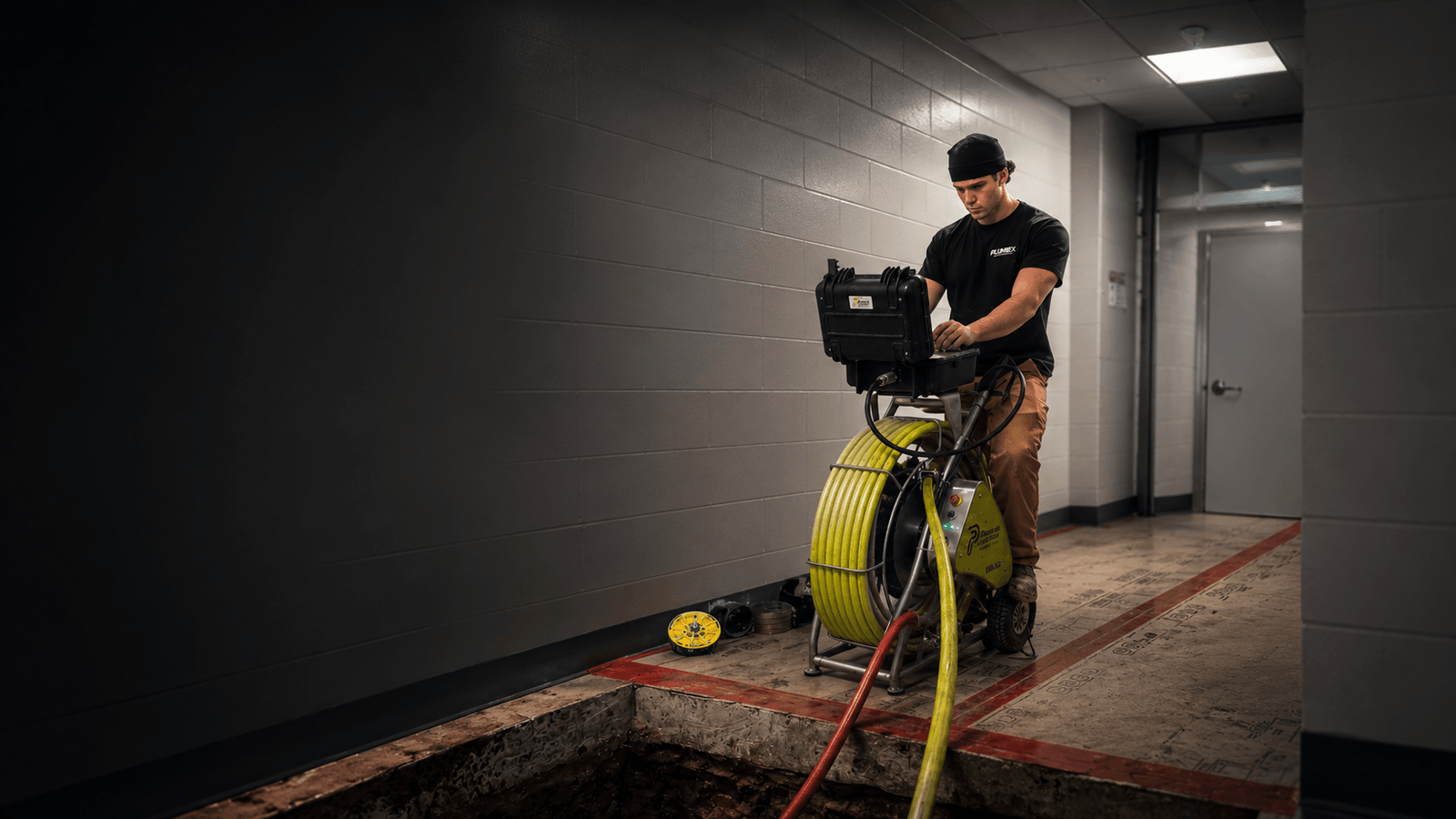
TrenchX uses inversion lining to position qualifying resin-saturated CIPP liners through complex pipe runs, bends, and restricted access conditions while maintaining controlled contact with the host pipe.
Inversion lining in Charleston, SC is a CIPP installation method that turns a resin-saturated liner inside out as it travels through the host pipe. Controlled air or water pressure advances the liner while pressing the resin-bearing surface directly against the existing pipe wall.
This approach can be useful where bends, changes in direction, limited access, or other configuration challenges make a conventional pulled-in-place installation more difficult. The installation method changes, but the objective remains the same: create a continuous structural liner inside a qualifying existing pipe.
Successful inversion still begins with sewer inspections and proper host-pipe preparation. Where buildup, sediment, roots, or debris affect the pipe, hydro-jetting and pipeline cleaning may be required before the liner is installed.
Inversion is one installation approach within CIPP lining . Liner design, pipe diameter, access, geometry, resin system, and cure requirements all influence the final installation plan. Some projects may also use UV curing or another controlled cure method depending on the specified lining system.
Schedule a Pipe InspectionInversion does not make every pipe a lining candidate. It provides a different installation approach when the documented host pipe and project geometry support structural CIPP rehabilitation.
Use pressure-driven installation to help position qualifying liners through pipe configurations that contain changes in direction.
Evaluate inversion where available cleanouts, structures, or other access conditions make conventional liner handling more difficult.
Use controlled installation pressure to position the resin-bearing liner surface against the prepared host pipe before curing begins.
Remove qualifying buildup, roots, scale, sediment, and debris so the liner can be installed against a properly prepared surface.
Explore Pipe Cleaning → 05Use inversion as an installation technique within a qualifying CIPP rehabilitation plan designed around the existing pipe.
Explore CIPP Lining → 06Match the liner and installation method with an appropriate cure process based on the selected CIPP system and project conditions.
Explore UV Curing →Document pipe condition, geometry, diameter, access, restrictions, and surface preparation requirements before liner installation.
Advance the resin-saturated liner using controlled air or water pressure while positioning it against the existing pipe wall.
Complete the specified cure process and reinspect the renewed pipe to document the finished structural liner.
Inversion describes how a CIPP liner is installed. It does not replace the condition assessment that determines whether structural lining is appropriate in the first place.
A pipe with bends or limited access may benefit from inversion, but the host pipe still has to support rehabilitation. Collapse, severe deformation, missing pipe, or other major failure can require a different solution.
TrenchX can compare inversion-based CIPP lining with patch lining for certain localized defects or pipe bursting when the documented pipe condition makes replacement more appropriate.
Compare TrenchX Pipe SolutionsUnderground pipe does not exist in isolation. Liner installation may need to account for occupied buildings, limited staging areas, interior access points, parking, landscaping, structural features, and normal property operations. On developed sites, even a technically suitable rehabilitation method has to be planned around how crews reach the pipe, where equipment can be positioned, and how the work affects the people and facilities above the underground system.
Inversion lining can be evaluated for qualifying projects serving managed properties , multi-residential sites , and facilities where pipe geometry and site access both influence the rehabilitation plan. The installation strategy can be coordinated around building access, tenant or occupant movement, parking circulation, work areas, and other operational constraints while still keeping the host-pipe condition, liner design, and curing requirements at the center of the project.
TrenchX evaluates qualifying inversion lining, CIPP rehabilitation, inspection, and pipe-preparation projects across Charleston and surrounding South Carolina Lowcountry communities.
Inversion lining is a CIPP installation technique that advances a resin-saturated liner through the host pipe using controlled pressure.
The method can be useful for qualifying pipe runs with bends, access constraints, or geometry that influences how the liner should be installed.
These questions explain how TrenchX approaches inversion lining in Charleston, SC and surrounding Lowcountry communities.
Inversion lining is a CIPP installation method in which a resin-saturated liner turns inside out as controlled air or water pressure advances it through the host pipe and presses the liner against the existing pipe wall.
Inversion uses pressure to advance and turn the liner into position. A pulled-in-place approach physically pulls the liner through the host pipe before inflation and curing.
It can be. Pipe geometry, bend severity, diameter, access, condition, liner design, and project requirements all influence whether inversion is an appropriate installation method.
Yes, the host pipe generally needs to be inspected and properly prepared. Qualifying roots, scale, grease, sediment, debris, and other material may need to be removed before lining.
Inversion is an installation technique used within CIPP rehabilitation. CIPP describes the structural liner system, while inversion describes one method of positioning that liner inside the host pipe.
TrenchX evaluates qualifying inversion lining and CIPP rehabilitation projects across Charleston and surrounding South Carolina Lowcountry communities. Visit the TrenchX service-area directory for county and community coverage information.