Severely Deteriorated Pipe
Replace qualifying pipe that has deteriorated beyond a practical rehabilitation scope while continuing to use the established underground alignment.


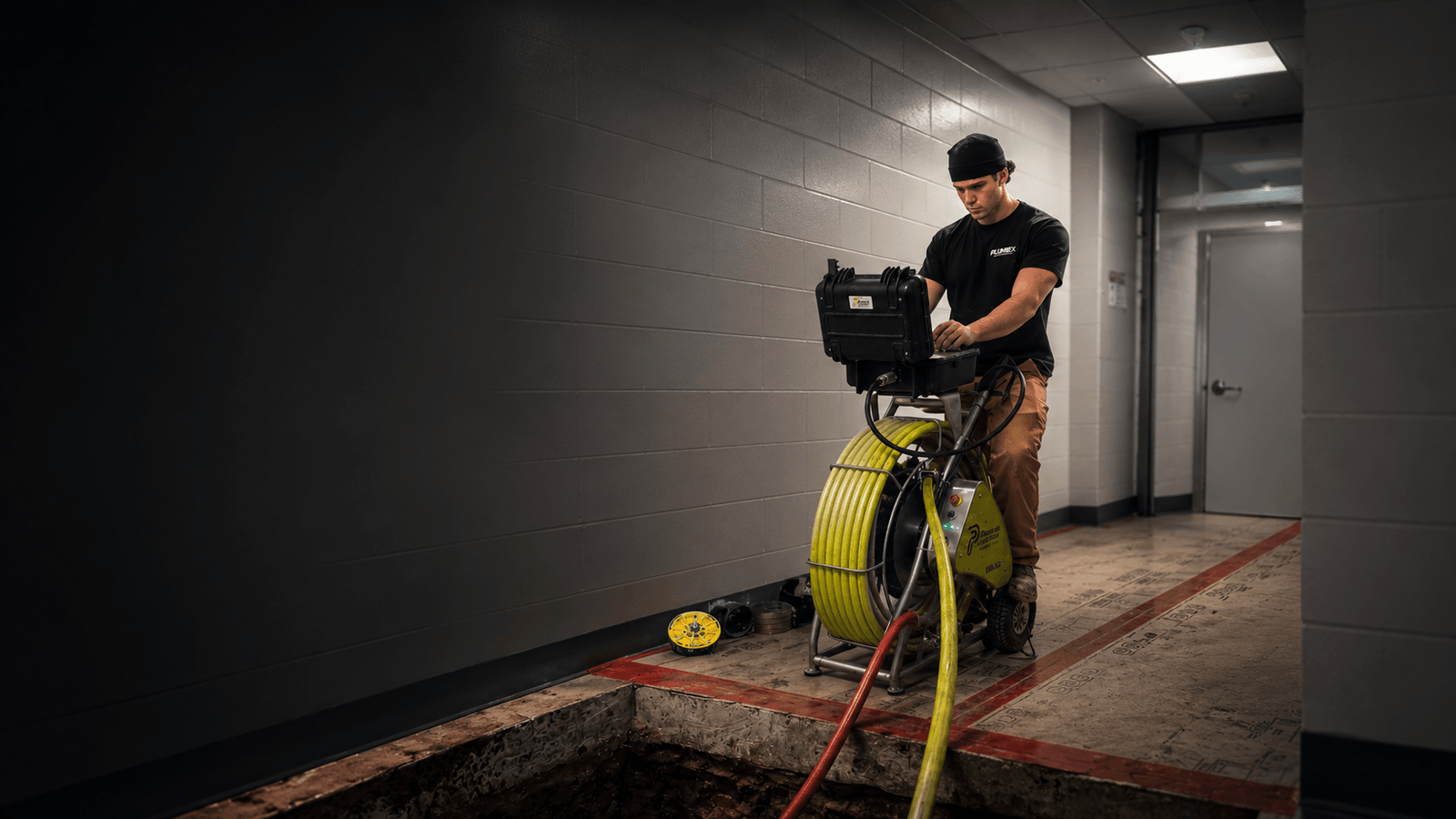
TrenchX replaces qualifying failed underground pipe through the existing alignment with pipe bursting, reducing the need for a continuous open trench across pavement, landscaping, drives, and other finished surfaces.
Pipe bursting in Charleston, SC replaces qualifying failing underground pipe rather than rehabilitating the inside of the existing line. A bursting head travels through the established alignment, breaking or displacing the host pipe while a new replacement pipe is pulled into position behind it.
The process typically uses planned entry and exit access instead of excavating continuously from one end of the pipe to the other. This can substantially reduce disturbance where the existing line passes beneath driveways, pavement, landscaping, courtyards, parking areas, and other developed portions of a property.
Before replacement begins, sewer inspections can help document the existing alignment and pipe condition. If the host pipe remains suitable for structural rehabilitation, CIPP lining may provide an alternative that renews the pipe without replacing the entire line.
Pipe bursting can be considered for managed properties , multi-residential sites , and retail properties where both the failed underground line and the finished property above it need to be considered during replacement planning.
Schedule a Pipe InspectionBursting suitability depends on host-pipe material, alignment, access, nearby utilities, connections, site conditions, replacement diameter, and the reason the existing pipe has failed.
Replace qualifying pipe that has deteriorated beyond a practical rehabilitation scope while continuing to use the established underground alignment.
Evaluate replacement where structural failure is too extensive for lining and the existing route remains suitable for a trenchless bursting operation.
When extensive deterioration and recurring root intrusion indicate the pipe itself should be replaced, bursting can create a new continuous replacement line.
Explore Root Removal →Certain projects may allow a replacement pipe with increased capacity, subject to the existing alignment, surrounding conditions, design requirements, and applicable approvals.
Reduce continuous surface excavation where failing pipe runs beneath driveways, pavement, parking areas, landscaping, or other developed property features.
Compare full replacement with structural rehabilitation when the documented pipe condition makes the best path forward less obvious.
Compare CIPP Lining →Document the failed pipe, access points, connections, utilities, alignment, material, and site conditions before replacement begins.
Pull the bursting assembly through the established route while the new replacement pipe follows into the underground alignment.
Complete required connections, restore access areas, and verify the finished replacement before the project is closed out.
Pipe bursting makes sense when the existing pipe needs replacement rather than an internal repair. Severe deterioration, collapse, repeated failures, or certain capacity requirements can shift the project toward a full replacement strategy.
Other pipe can remain in place and be structurally rehabilitated. When the host alignment is intact and conditions support lining, replacing the entire pipe may introduce work that the system does not actually require.
TrenchX can compare pipe bursting with CIPP lining for full-length structural rehabilitation, patch lining for certain localized defects, or epoxy pipe coating where qualifying interior pipe conditions call for a different type of renewal.
Compare TrenchX Pipe SolutionsTrenchX evaluates qualifying trenchless pipe replacement projects across Charleston and surrounding South Carolina Lowcountry communities, with each scope built around the existing line and the property above it.
Pipe bursting replaces qualifying failed underground pipe through the existing corridor while reducing the need for a continuous open trench along the entire run.
The method still requires access and careful evaluation of the pipe, alignment, connections, utilities, surrounding soil, and property conditions.
These questions explain how TrenchX approaches pipe bursting in Charleston, SC and surrounding Lowcountry communities.
Pipe bursting is a trenchless replacement method that moves a bursting assembly through an existing underground pipe while pulling new replacement pipe into the established alignment.
Pipe bursting generally requires planned access for launching, receiving, connections, and other project needs, but it can avoid excavating a continuous trench along the full pipe route.
Pipe bursting is considered when the existing pipe needs replacement rather than internal rehabilitation. CIPP may be more appropriate when the host pipe and alignment remain suitable for structural lining.
Certain projects may allow a larger replacement pipe, but upsizing depends on the existing alignment, soil conditions, utilities, replacement design, access, and applicable project requirements.
HDPE is commonly used for pipe bursting because fused sections can create a continuous replacement run. Final material selection depends on the system, design, application, and project requirements.
TrenchX evaluates qualifying pipe bursting and trenchless replacement projects across Charleston and surrounding South Carolina Lowcountry communities. Visit the TrenchX service-area directory for county and community coverage information.