Controlled Cure Cycle
Advance the UV light train through the installed liner according to the specified cure rate for the resin and liner system.


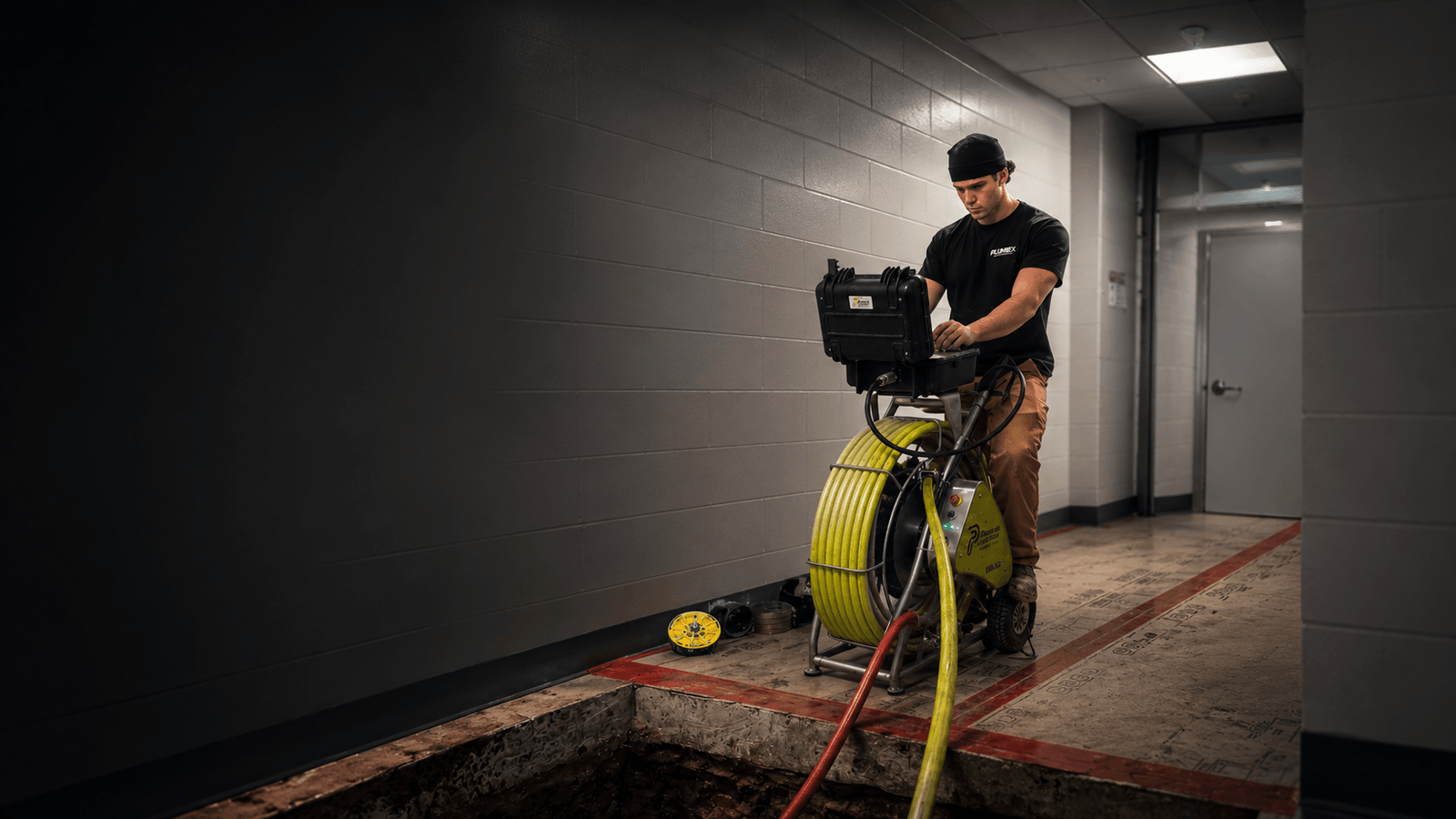
TrenchX uses controlled ultraviolet light to cure qualifying CIPP liner systems, providing a documented rehabilitation process built around liner design, host-pipe condition, installation requirements, and project access.
UV CIPP curing in Charleston, SC uses a resin system designed to polymerize when exposed to ultraviolet light. After the qualifying liner has been positioned and inflated against the host pipe, a UV light train travels through the liner at a controlled rate to initiate and complete the curing process.
Unlike curing methods that rely primarily on externally supplied heat, ultraviolet curing activates the specified resin directly with light. Depending on liner design, pipe diameter, length, equipment, and project requirements, the active cure can often be completed within a comparatively short and closely controlled installation window.
UV curing is one part of the larger CIPP lining process. Before curing begins, sewer inspections help document the host pipe, while hydro-jetting and pipeline cleaning can prepare qualifying pipe surfaces before liner installation.
Installation method matters too. Some projects may use inversion lining to position the liner, while other systems use a different installation approach. Pipe geometry, access, liner construction, resin chemistry, and project specifications determine whether UV curing fits the complete rehabilitation plan.
Schedule a Pipe InspectionUV curing is selected as part of a complete liner system. The value comes from matching the cure technology to the liner, host pipe, installation method, access conditions, and project schedule.
Advance the UV light train through the installed liner according to the specified cure rate for the resin and liner system.
Evaluate UV curing where reducing the active curing window can help limit how long access points and equipment remain committed to the rehabilitation process.
Record relevant installation and curing parameters to provide a project record that supports quality control and final documentation.
Use UV curing as one component of a qualifying structural lining system designed around the documented host-pipe condition.
Explore CIPP Lining → 05Coordinate the cure method with the selected approach for positioning and holding the liner against the prepared host pipe.
Explore Inversion → 06Reinspect qualifying systems after rehabilitation to document the renewed pipe and support project closeout.
Explore Inspections →Inspect and clean the qualifying pipe, confirm geometry and access, and prepare the surface for the specified liner system.
Place the liner against the host pipe using the selected installation method and maintain the required shape before curing.
Advance the UV system through the liner under controlled parameters, then complete inspection and project documentation.
UV curing describes how a compatible CIPP liner is hardened after it has been installed. It does not determine whether the existing pipe is suitable for structural rehabilitation in the first place.
The host pipe still needs to be inspected, cleaned, prepared, and evaluated for geometry, structural condition, access, and other project constraints. The liner and resin system also have to be designed specifically for the selected curing process.
If the pipe is a candidate for structural rehabilitation, TrenchX can evaluate CIPP lining and the appropriate installation and cure approach. For a qualifying localized defect, patch lining may be enough, while pipe bursting can be considered where replacement is more appropriate.
Compare TrenchX Pipe SolutionsPipe rehabilitation often takes place beneath active properties where equipment access, shutdown windows, staging space, parking, occupants, and normal operations all influence the work. A curing method therefore has to make sense not only for the liner itself, but also for the environment in which the rehabilitation is being completed.
A controlled UV cure can be evaluated where project teams need a closely managed curing process and predictable field sequence. The installation still has to account for how equipment reaches the access point, how long the system can remain out of service, where crews can stage safely, and what portions of the property must stay accessible during rehabilitation.
TrenchX can evaluate qualifying CIPP projects serving hospitals , schools and campuses , and facilities where pipe condition, access restrictions, operational schedules, surrounding infrastructure, and project documentation all have to be considered together. The result is a rehabilitation plan built around both the underground system and the property that depends on it.
TrenchX evaluates qualifying UV-cured CIPP rehabilitation, inspection, cleaning, and liner-installation projects across Charleston and surrounding South Carolina Lowcountry communities.
UV curing is a controlled curing method used with compatible trenchless CIPP liner systems.
Suitability depends on the liner, resin system, pipe condition, geometry, access, installation method, and project requirements.
These questions explain how TrenchX approaches UV CIPP curing in Charleston, SC and surrounding Lowcountry communities.
UV CIPP curing uses ultraviolet light to activate and cure a compatible resin system after a trenchless liner has been installed and positioned against the host pipe.
After the liner is installed and inflated, a UV light train travels through the liner at a controlled rate. The ultraviolet energy activates the specified resin and cures the liner into its finished structural form.
UV systems can provide a comparatively short active curing cycle, although actual project duration depends on pipe length, diameter, liner construction, resin system, installation requirements, and field conditions.
No. The curing method must match the specified liner and resin system. UV curing is one option within CIPP rehabilitation and is selected only when the complete system and project conditions support it.
Yes. The host pipe needs to be evaluated and properly prepared before structural lining. Roots, grease, scale, sediment, debris, or other restrictions may need to be removed before installation.
TrenchX evaluates qualifying UV-cured CIPP rehabilitation projects across Charleston and surrounding South Carolina Lowcountry communities. Visit the TrenchX service-area directory for county and community coverage information.