Cracks & Failed Joints
Document qualifying cracks, separated joints, and other structural defects before selecting a localized or full-length rehabilitation method.


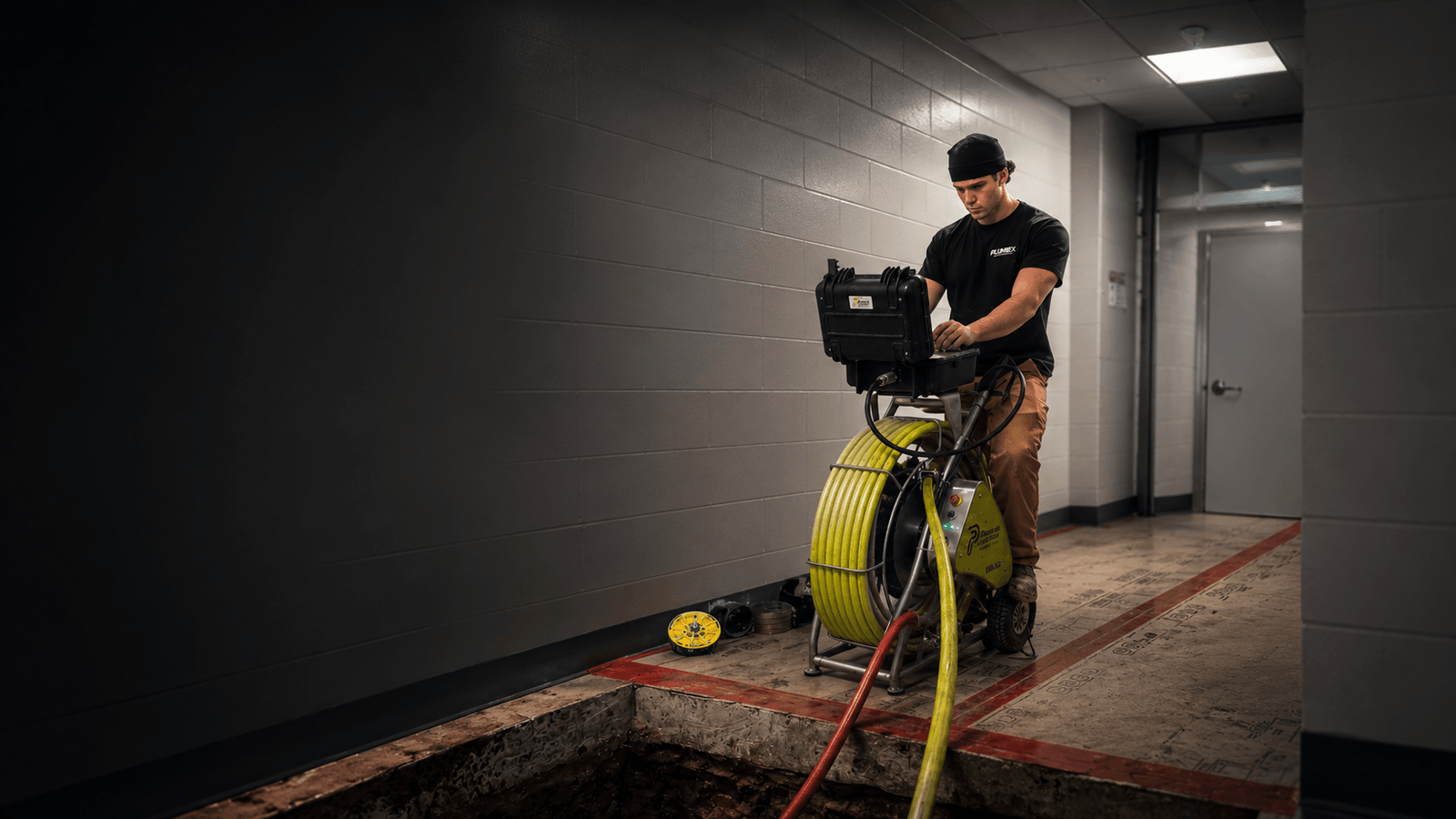
TrenchX repairs qualifying smaller-diameter sewer laterals, service lines, and underground pipe systems with trenchless methods designed to reduce excavation across driveways, landscaping, buildings, and other developed areas.
2″–8″ no-dig pipe repair in Charleston, SC addresses qualifying smaller-diameter underground systems without automatically opening the entire pipe corridor. Sewer laterals, building connections, and service lines often run beneath driveways, landscaping, walkways, finished surfaces, and other areas that make conventional excavation disruptive.
The right trenchless method depends on what the pipe inspection reveals. Isolated defects may be candidates for sectional repair, while longer structural deterioration can require a full liner. Surface condition, pipe material, diameter, access, geometry, and the extent of damage all influence which repair method fits.
TrenchX begins with sewer inspections to document the line and locate qualifying defects. hydro-jetting and pipeline cleaning may then be used where roots, grease, scale, sediment, or debris must be removed before the host pipe can be properly evaluated or prepared.
Depending on the documented condition, the repair plan may involve CIPP lining for longer structural rehabilitation, patch lining for certain localized defects, or epoxy pipe coating where qualifying interior surface renewal is more appropriate.
Schedule a Pipe InspectionPipe diameter alone does not determine the repair. Defect type, structural condition, access, alignment, material, preparation needs, and the property above the line all influence the final approach.
Document qualifying cracks, separated joints, and other structural defects before selecting a localized or full-length rehabilitation method.
Remove qualifying roots and evaluate the opening that allowed them into the pipe so the repair addresses more than the immediate blockage.
Plan around cleanouts, service connections, confined work areas, finished surfaces, and other access limitations common to smaller pipe systems.
Confirm that the existing pipe has the geometry and structural condition required for the selected rehabilitation technique.
Reinforce qualifying isolated defects without automatically rehabilitating an entire otherwise serviceable pipe run.
Explore Patch Lining → 06Evaluate structural lining where deterioration extends beyond one isolated point and the host pipe remains suitable for rehabilitation.
Explore CIPP Lining →Camera the line, locate qualifying defects, and document pipe material, diameter, geometry, access, and existing condition.
Remove qualifying restrictions and prepare the host pipe as required for the selected repair or rehabilitation method.
Complete the planned trenchless repair and reinspect the line when appropriate to document the rehabilitated condition.
Smaller pipe does not automatically require full-length rehabilitation. When most of a line remains serviceable and the damage is concentrated in one qualifying area, a targeted repair can address the defect without treating the entire run.
Longer deterioration, repeated joint failure, widespread cracking, or multiple structural defects may point toward a full liner instead. Severe collapse, missing pipe, or unsuitable geometry can require a replacement strategy rather than lining.
TrenchX can compare patch lining for certain isolated defects, CIPP lining for qualifying longer structural rehabilitation, and pipe bursting where the existing line requires trenchless replacement.
Compare TrenchX Pipe SolutionsSmaller-diameter service lines frequently pass beneath the parts of a property owners want to protect most: driveways, patios, landscaping, sidewalks, finished interiors, courtyards, parking areas, and occupied buildings. Repair planning therefore has to consider both the pipe condition and the surface above it.
Trenchless work can reduce full-length excavation, but access still matters. Existing cleanouts, pipe connections, entry points, building use, staging space, nearby utilities, and the ability to prepare the host pipe can all influence which method is practical.
TrenchX can evaluate qualifying small-diameter pipe repair for residential properties , multi-residential sites , and managed properties where access, occupied areas, landscaping, pavement, service continuity, and existing infrastructure all need to be considered while the repair scope is developed.
TrenchX evaluates qualifying 2″–8″ no-dig pipe repair, inspection, cleaning, lining, localized repair, and trenchless replacement needs across Charleston and surrounding South Carolina Lowcountry communities.
Smaller-diameter pipe repair can involve multiple trenchless methods depending on the documented condition of the existing line.
Inspection, cleaning, access, pipe material, geometry, structural condition, and defect length all influence the repair approach.
These questions explain how TrenchX approaches qualifying 2″–8″ no-dig pipe repair in Charleston, SC and surrounding Lowcountry communities.
It refers to trenchless repair and rehabilitation methods used for qualifying smaller-diameter underground pipe systems without automatically excavating continuously along the entire pipe run.
TrenchX can evaluate qualifying sewer laterals, service lines, building connections, and other smaller-diameter underground systems within the applicable size range.
In certain cases, yes. If inspection confirms that the defect is localized and the surrounding pipe remains suitable, patch lining or another targeted repair may be considered.
Full lining may be considered where qualifying structural deterioration extends through a longer portion of the pipe and the host line remains suitable for rehabilitation.
Yes. Inspection helps document defect location, pipe material, geometry, access, restrictions, and structural condition before the repair method and scope are selected.
TrenchX evaluates qualifying 2″–8″ no-dig pipe repair projects across Charleston and surrounding South Carolina Lowcountry communities. Visit the TrenchX service-area directory for county and community coverage information.