Inspect the
Underground System
Document pipe condition, restrictions, defects, access, and the portion of the system that actually requires attention.


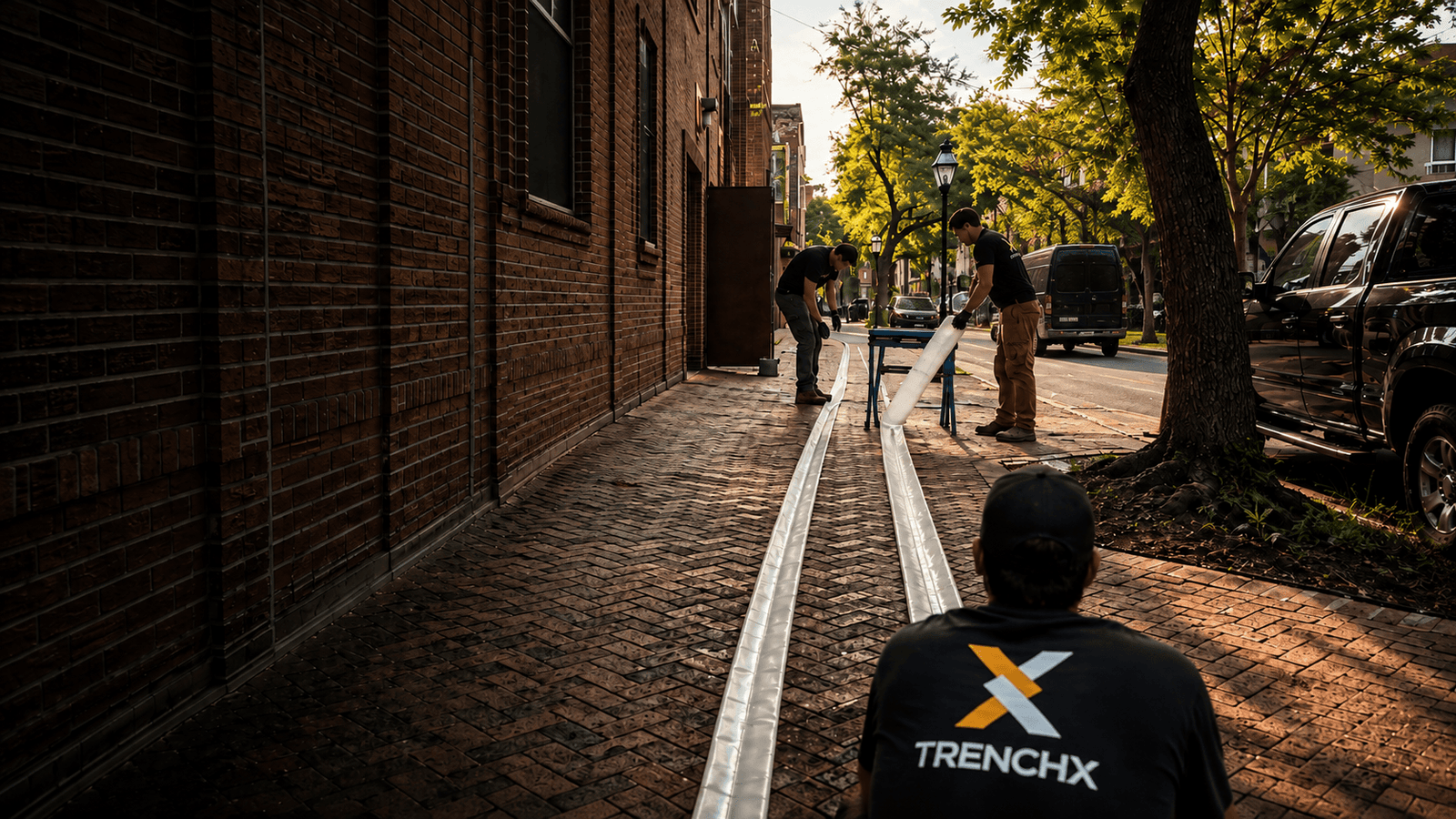
TrenchX provides inspection, cleaning, repair, rehabilitation, and qualifying no-dig pipe solutions across Charleston and surrounding South Carolina Lowcountry communities.
Underground pipe conditions across the South Carolina Lowcountry are rarely identical. Dense Charleston properties, established neighborhoods, island communities, growing residential developments, commercial sites, institutional campuses, and managed facilities each bring different access, infrastructure, and operating requirements.
TrenchX evaluates the pipe and the property together before defining the repair scope. Sewer inspections can document visible conditions, hydro-jetting and cleaning can prepare qualifying systems, and CIPP lining, localized repair, or pipe bursting may be considered according to what the underground system actually requires.
The service-area pages below connect that condition-first approach with the property types, access considerations, and infrastructure patterns found throughout Charleston and the surrounding Lowcountry.
See How TrenchX Approaches Pipe RehabilitationStart with a county-level service page for a broader look at underground pipe repair, rehabilitation, property types, and nearby TrenchX communities within each regional coverage area.
Trenchless planning for residential, commercial, hospitality, institutional, and managed properties throughout the southern Lowcountry.
Explore Beaufort County → County Service AreaPipe inspection and rehabilitation planning for growing communities, commercial properties, facilities, and active sites.
Explore Berkeley County → Primary Charleston CoverageRegional trenchless pipe service spanning Charleston, North Charleston, island communities, developed properties, and high-use facilities.
Explore Charleston County → County Service AreaCondition-based underground pipe planning for residential, commercial, institutional, and larger Lowcountry properties.
Explore Colleton County → County Service AreaTrenchless repair and rehabilitation support across established communities, growing developments, and active commercial properties.
Explore Dorchester County →Each community page is built around local property conditions, recurring pipe concerns, relevant trenchless methods, and nearby service-area relationships rather than repeating the same generic city content.
Pipe rehabilitation around dense commercial areas, established neighborhoods, historic properties, and active sites.
Explore Charleston → Berkeley AreaSewer inspection, root removal, cleaning, and no-dig repair around residential and growing community infrastructure.
Explore Goose Creek → Charleston RegionLeak-focused diagnostics, cleaning, localized repair, and CIPP rehabilitation around developed properties.
Explore Hanahan → Island Service AreaRoot intrusion, sewer inspections, pipe cleaning, and rehabilitation around established island properties.
Explore James Island → Island Service AreaCondition-based rehabilitation and replacement planning for longer underground runs and developed properties.
Explore Johns Island → Regional Service AreaInspection, cleaning, and CIPP rehabilitation around mixed residential, commercial, and active-property infrastructure.
Explore Ladson → Charleston CountyPipe repair designed around developed properties, pavement, landscaping, parking, and other surface improvements.
Explore Mount Pleasant → Charleston RegionInspection and rehabilitation around commercial, institutional, multi-unit, and high-use properties.
Explore North Charleston → Island Service AreaLeak localization and targeted no-dig pipe rehabilitation around constrained and highly developed island properties.
Explore Sullivan's Island → Dorchester RegionInspection, hydro-jetting, and structural lining around growing residential communities and commercial properties.
Explore Summerville → Charleston AreaRoot intrusion, recurring sewer restrictions, cleaning, reinspection, and CIPP rehabilitation around established properties.
Explore West Ashley →Document pipe condition, restrictions, defects, access, and the portion of the system that actually requires attention.
Cleaning, localized repair, rehabilitation, and replacement solve different conditions and should not share one default scope.
Access, occupants, pavement, landscaping, buildings, traffic, and operations all influence how the field work should be coordinated.
Service area does not determine the repair method—the underground system does. TrenchX combines inspection, preparation, localized repair, rehabilitation, and replacement options across qualifying projects throughout the Lowcountry.
Document visible pipe conditions before defining cleaning, rehabilitation, or replacement work.
Explore Service → 02Remove qualifying buildup and restrictions to restore flow and prepare the host pipe for evaluation.
Explore Service → 03Structurally rehabilitate qualifying damaged pipe from within while reducing continuous excavation.
Explore Service → 04Replace eligible deteriorated pipe along its existing alignment when rehabilitation is not the right solution.
Explore Service → 05Remove qualifying intrusive root growth to restore flow and expose more of the host pipe for inspection.
Explore Service → 06Narrow qualifying leakage concerns and focus corrective work around the affected section of the system.
Explore Service →A county boundary does not tell the full story of an underground pipe project. One property may involve a residential yard and mature landscaping, while another requires access through parking, occupied buildings, pedestrian areas, or an active commercial site.
TrenchX considers those conditions while the technical scope is being developed. Pipe material, diameter, alignment, structural condition, access points, surrounding improvements, and daily use of the property all influence how the work should move forward.
That property-specific approach allows the same regional service network to support homes, communities, commercial properties, institutions, and facilities without treating every underground system as the same project.
See How TrenchX Approaches the WorkTrenchX serves qualifying underground systems across residential, managed, commercial, institutional, and high-use environments. Property type helps shape access, coordination, and field planning even when the underlying pipe problem is similar.
TrenchX works around organizations, commercial properties, institutional sites, managed environments, and active facilities where underground infrastructure has to be addressed while accounting for access, occupants, scheduling, equipment movement, and the normal use of the property above it.






TrenchX serves qualifying underground pipe systems across Charleston and surrounding South Carolina Lowcountry communities. Individual service areas include different property types, access conditions, infrastructure patterns, and project requirements.
The repair method is determined by pipe condition rather than geography alone. Inspection, cleaning, pipe material, diameter, access, structural condition, and the extent of damage all influence which trenchless solutions are realistic candidates.
The questions below explain how regional coverage works and how to determine whether a specific property or underground system fits the TrenchX service network.
TrenchX serves qualifying properties across Charleston and the surrounding South Carolina Lowcountry, including county-level coverage and individual communities shown throughout this service-area directory.
TrenchX serves qualifying projects throughout Charleston County, including Charleston, North Charleston, Mount Pleasant, West Ashley, James Island, Johns Island, Sullivan's Island, and surrounding areas.
Yes. TrenchX supports qualifying residential, multi-residential, property-management, commercial, office, retail, food-and-beverage, institutional, healthcare, and facility pipe systems throughout its service area.
Service availability depends on the pipe and project rather than the location name alone. Material, diameter, structural condition, access, configuration, and site requirements help determine which repair methods are appropriate.
An inspection and condition assessment can help determine whether the system is a candidate for cleaning, localized repair, structural lining, trenchless replacement, or another corrective method.
The locations shown represent the primary TrenchX service-area network. Property owners and project teams outside a listed community can contact TrenchX to discuss the location, system, project scope, and service availability.