Diagnose Before
Work Begins
Condition information helps distinguish routine maintenance from defects that require repair, rehabilitation, or replacement.


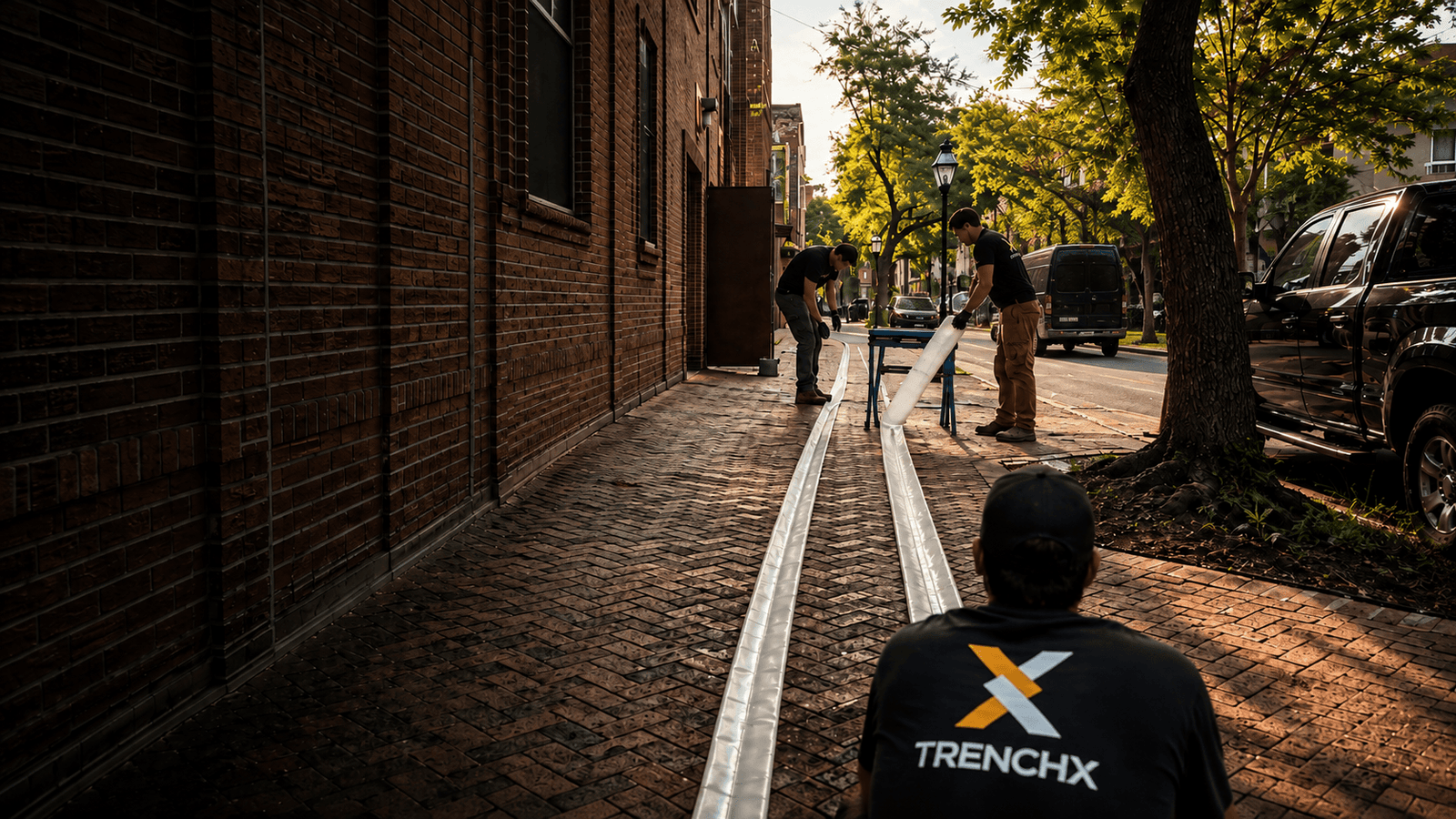
Inspect, clean, repair, rehabilitate, or replace qualifying underground pipe systems with solutions built around the condition of the pipe, site access, and the property above it.
Trenchless pipe repair in Charleston, SC begins with understanding what is actually happening inside the system. A backup, recurring blockage, slow drain, root intrusion, damaged joint, or deteriorated sewer line may create similar symptoms while requiring very different corrective work.
TrenchX can begin with sewer inspections to document visible pipe conditions and identify areas that need attention. When grease, scale, debris, roots, or other qualifying buildup interferes with flow, hydro-jetting and pipeline cleaning can help clear the line and improve visibility for further evaluation.
If the pipe has structural damage, rehabilitation options may include CIPP lining or a targeted patch lining repair. Where an existing pipe is no longer a good rehabilitation candidate, pipe bursting may provide a replacement path for qualifying systems.
Different pipe conditions call for different tools. TrenchX combines inspection, cleaning, localized repair, structural rehabilitation, and replacement methods so the project scope can be based on the actual condition of the system.
See inside qualifying lines and document visible conditions before deciding how the underground problem should be addressed.
Explore Service → 02Use controlled high-pressure water to remove qualifying buildup, debris, and restrictions that interfere with pipe performance.
Explore Service → 03Rehabilitate qualifying damaged pipe from within using a structural cured-in-place liner while reducing continuous excavation.
Explore Service → 04Reinforce qualifying localized defects without rehabilitating an entire pipe run when the surrounding line remains serviceable.
Explore Service → 05Remove intrusive root growth that restricts flow and can interfere with inspection of the underlying pipe condition.
Explore Service → 06Replace qualifying failing underground pipe along the existing alignment while reducing the need for full-length excavation.
Explore Service →Condition information helps distinguish routine maintenance from defects that require repair, rehabilitation, or replacement.
Pipe diameter, material, access, structural condition, and project requirements all influence which trenchless method makes sense.
Qualifying no-dig methods can address underground concerns while limiting the amount of excavation required across the property.
Charleston includes dense commercial corridors, historic and established neighborhoods, residential properties, institutional campuses, hospitality environments, and occupied buildings where access and daily operations can directly affect how underground work is performed.
Equipment placement, parking, pedestrian movement, landscaping, paved areas, existing buildings, pipe alignment, and available access points can all influence the field plan. A technically appropriate repair method also has to work within those real-world property conditions.
TrenchX evaluates both the pipe and the site before the work moves forward. For qualifying systems, trenchless rehabilitation can help address damaged underground infrastructure without treating extensive excavation as the default approach.
See Why Clients Choose TrenchXThe repair method should come after the condition is understood. TrenchX uses inspection findings, pipe characteristics, access, and property conditions to narrow the options and build a practical project scope.
Document visible conditions and identify the portion of the pipe system that needs closer attention.
Review pipe condition, material, diameter, access, alignment, and the requirements of the surrounding property.
Determine whether cleaning, localized repair, rehabilitation, or replacement provides the appropriate path forward.
Carry out the selected method while accounting for access, site logistics, and the operating needs of the property.
Pipe infrastructure operates differently across homes, managed properties, multi-unit communities, commercial buildings, healthcare environments, and larger facilities. TrenchX plans rehabilitation around both the underground system and the demands surrounding it.
TrenchX supports organizations, facilities, commercial properties, institutional sites, and public-facing environments where underground infrastructure work has to account for access, scheduling, occupants, traffic, and the daily operations continuing above the pipe system.






TrenchX serves qualifying projects throughout Charleston County and neighboring Lowcountry communities. Explore nearby pages for more localized information about trenchless pipe inspection, cleaning, rehabilitation, and repair.
Underground pipe symptoms do not always reveal whether the system needs cleaning, localized repair, structural rehabilitation, or replacement. Inspection provides a clearer view of the pipe before a repair path is selected.
Charleston properties can differ substantially in age, pipe material, access, surrounding improvements, occupancy, and how the sewer or plumbing infrastructure is used. Those conditions can affect both the repair method and the way the work needs to be staged.
These common questions explain how TrenchX approaches qualifying trenchless projects and why condition-based planning can help homeowners, property teams, and facility managers make better underground infrastructure decisions.
Depending on pipe condition and configuration, TrenchX offers solutions that can include CIPP lining, patch lining, pipe bursting, root removal, hydro-jetting, sewer inspections, leak detection, and other specialized rehabilitation methods. Inspection helps determine which approach fits the system.
Not always. Trenchless methods are intended to reduce unnecessary continuous excavation, but some projects still require access points or localized digging. The amount of surface work depends on the pipe, access conditions, and selected repair method.
The decision depends on pipe condition, material, diameter, access, structural integrity, configuration, and the type of defect present. A sewer inspection can provide useful condition information before a repair recommendation is made.
Yes. Sewer inspection is an important diagnostic step for many projects because it allows visible pipe conditions to be documented before cleaning, localized repair, rehabilitation, or replacement options are considered.
Yes. TrenchX supports qualifying residential properties along with commercial, multi-residential, institutional, facility, and property-management environments throughout the Charleston area.
Depending on the system, trenchless services can address conditions such as root intrusion, buildup, localized defects, leakage, deterioration, structural damage, and pipes that require rehabilitation or replacement. The appropriate method depends on the actual pipe condition.