Diagnose the Line
Before Opening the Site
Inspection findings help narrow where damage exists and how much of the underground system actually requires corrective work.


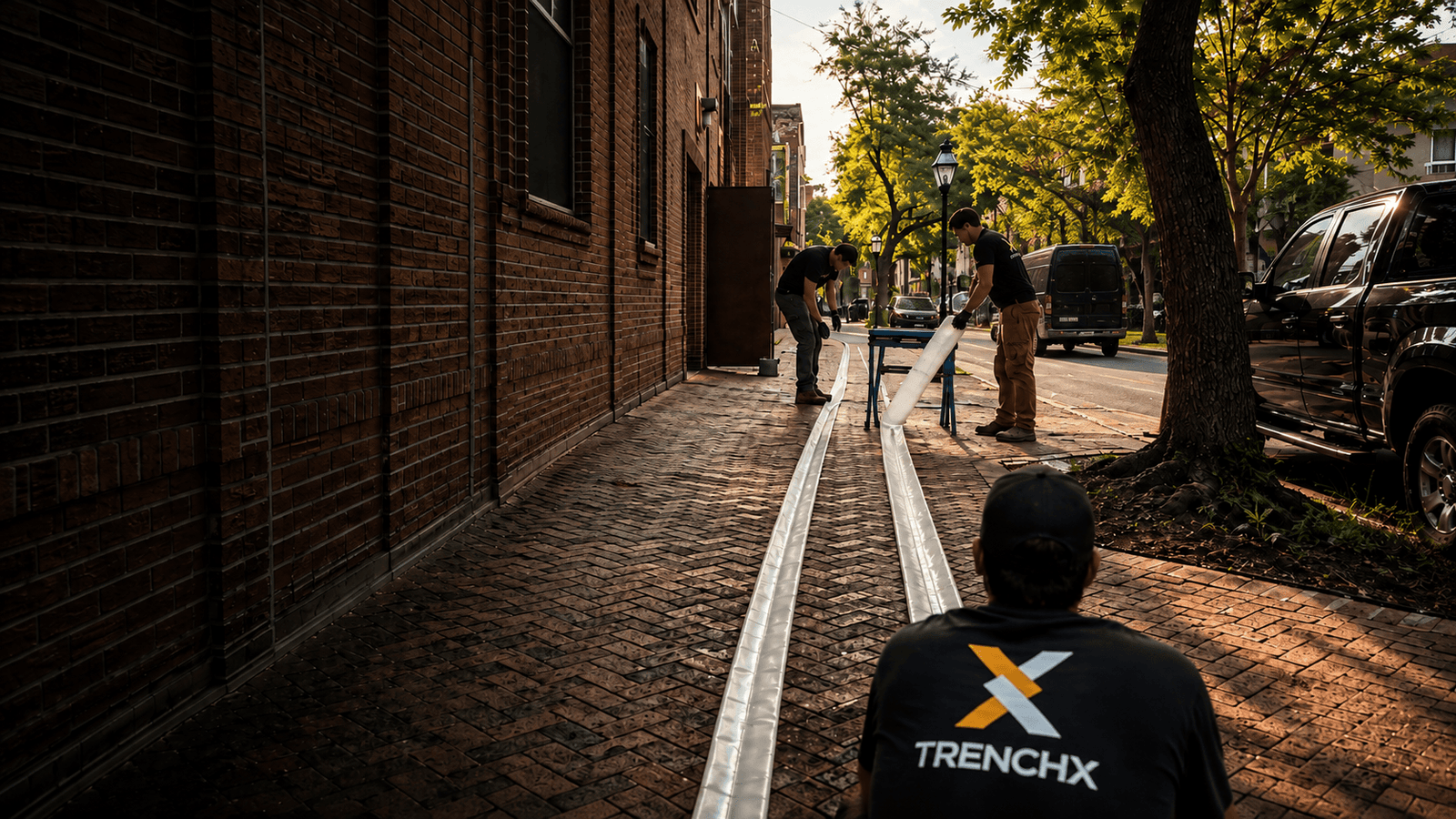
Inspect underground pipe conditions, clear qualifying restrictions, and evaluate rehabilitation options designed to address the system while helping limit unnecessary disruption above it.
Trenchless pipe repair in Mount Pleasant, SC begins by determining what is actually happening underground before deciding how much of the surrounding property needs to be involved. Buildup, damaged joints, localized defects, leakage, and structural deterioration can produce similar symptoms while requiring very different solutions.
TrenchX can use sewer inspections to document visible pipe conditions and identify the section of the system that needs attention. Where grease, scale, debris, or other accumulated material restricts flow, hydro-jetting and pipeline cleaning can help restore qualifying capacity and provide a clearer view of the host pipe.
If structural defects remain after cleaning, CIPP lining may allow qualifying pipe to be rehabilitated internally. Patch lining can provide another targeted option where damage is localized. Matching the repair to the actual condition can help avoid treating sidewalks, landscaping, pavement, and other surface improvements as part of the project when they do not need to be.
Inspection, cleaning, localized repair, structural rehabilitation, and leak-related work solve different problems. TrenchX uses pipe condition and site requirements to determine which options deserve consideration before the field scope is finalized.
Document visible defects, restrictions, deterioration, and other conditions before deciding how the underground system should be addressed.
Explore Service → 02Remove qualifying grease, scale, debris, and accumulated material that restricts flow or interferes with evaluation of the host pipe.
Explore Service → 03Structurally rehabilitate qualifying existing pipe from within while reducing the need for continuous excavation above the line.
Explore Service → 04Reinforce an eligible localized defect when the surrounding host pipe remains serviceable and does not require full-length lining.
Explore Service → 05Identify qualifying leakage concerns and focus corrective work around the portion of the underground system requiring attention.
Explore Service → 06Use planned inspection and cleaning to monitor system condition before developing restrictions become larger operational problems.
Explore Service →Inspection findings help narrow where damage exists and how much of the underground system actually requires corrective work.
Qualifying rehabilitation can renew damaged infrastructure without automatically replacing sections of pipe that remain functional.
No-dig methods can reduce continuous excavation around pavement, landscaping, buildings, parking, and other improvements.
Mount Pleasant pipe projects can take place around established neighborhoods, residential communities, commercial properties, office environments, retail sites, managed buildings, and other developed locations where the surface above the line already has significant daily use.
Landscaping, pavement, parking areas, sidewalks, driveways, buildings, pedestrian routes, existing utilities, equipment access, and operating schedules can all influence how inspection, preparation, and rehabilitation work should be staged.
TrenchX considers those conditions alongside pipe material, diameter, alignment, structural condition, and available access. When internal rehabilitation is technically appropriate, the field scope can often be concentrated around strategic work areas rather than unnecessarily disturbing the full surface above the pipe.
See How TrenchX Approaches Complex ProjectsA defined pipe condition makes it easier to decide what the system needs and what the surrounding property does not. TrenchX uses the findings from inspection and preparation to build the repair scope before rehabilitation work is carried into the field.
Document visible restrictions, leakage concerns, defects, deterioration, and the portion of the pipe requiring attention.
Clear qualifying buildup or debris where necessary so the host pipe can be evaluated and prepared for the next step.
Match maintenance, localized repair, CIPP lining, or another corrective method to the documented pipe condition.
Coordinate access, equipment placement, work areas, and property protection around the selected underground repair scope.
Residential communities, commercial properties, offices, retail environments, managed buildings, and larger facilities all rely on underground infrastructure while presenting different access and operating requirements. TrenchX plans around both sides of that equation.
TrenchX supports organizations, commercial properties, institutional sites, managed environments, and active facilities where underground work has to account for occupants, access, scheduling, pavement, landscaping, traffic, equipment placement, and the daily use of the property surrounding the pipe.






Mount Pleasant is part of a broader TrenchX service network across Charleston County and the surrounding Lowcountry. Explore nearby location pages for localized information about sewer inspection, cleaning, rehabilitation, and other trenchless pipe solutions.
Underground pipe repair becomes more complicated when the system runs beneath developed property. Pavement, landscaping, buildings, driveways, parking areas, and everyday property use can all influence which repair methods make sense.
Inspection, cleaning, pipe material, diameter, access, structural condition, and the location of defects help determine whether the system is a candidate for localized repair, CIPP lining, maintenance, or another corrective approach.
These Mount Pleasant trenchless pipe repair questions explain how TrenchX evaluates the underground system while also accounting for the developed property surrounding it.
Qualifying trenchless methods can reduce the need for continuous excavation along the pipe alignment. Access points or localized digging may still be required, but the field scope can often be concentrated around specific work areas.
Inspection helps document pipe condition, location of defects, restrictions, deformation, and other factors that influence whether the existing line is suitable for rehabilitation.
Qualifying host pipes generally need appropriate preparation before structural lining. Cleaning can remove buildup, debris, scale, and other material that may interfere with inspection or liner installation.
In some cases, yes. Patch lining may be appropriate when a defect is localized and the surrounding host pipe remains suitable. Inspection helps determine whether the damage is truly limited to one section.
Property conditions are part of project planning. Parking areas, landscaping, structures, pedestrian movement, equipment access, and available pipe entry points can all influence how qualifying trenchless work is staged.
TrenchX supports qualifying residential, multi-residential, commercial, property-management, office, retail, food-and-beverage, and other facility pipe systems. The appropriate solution depends on pipe condition, access, and property requirements.