Restore Flow Before
Defining the Repair
Cleaning qualifying restrictions can expose the pipe condition that needs to be evaluated before structural work is selected.


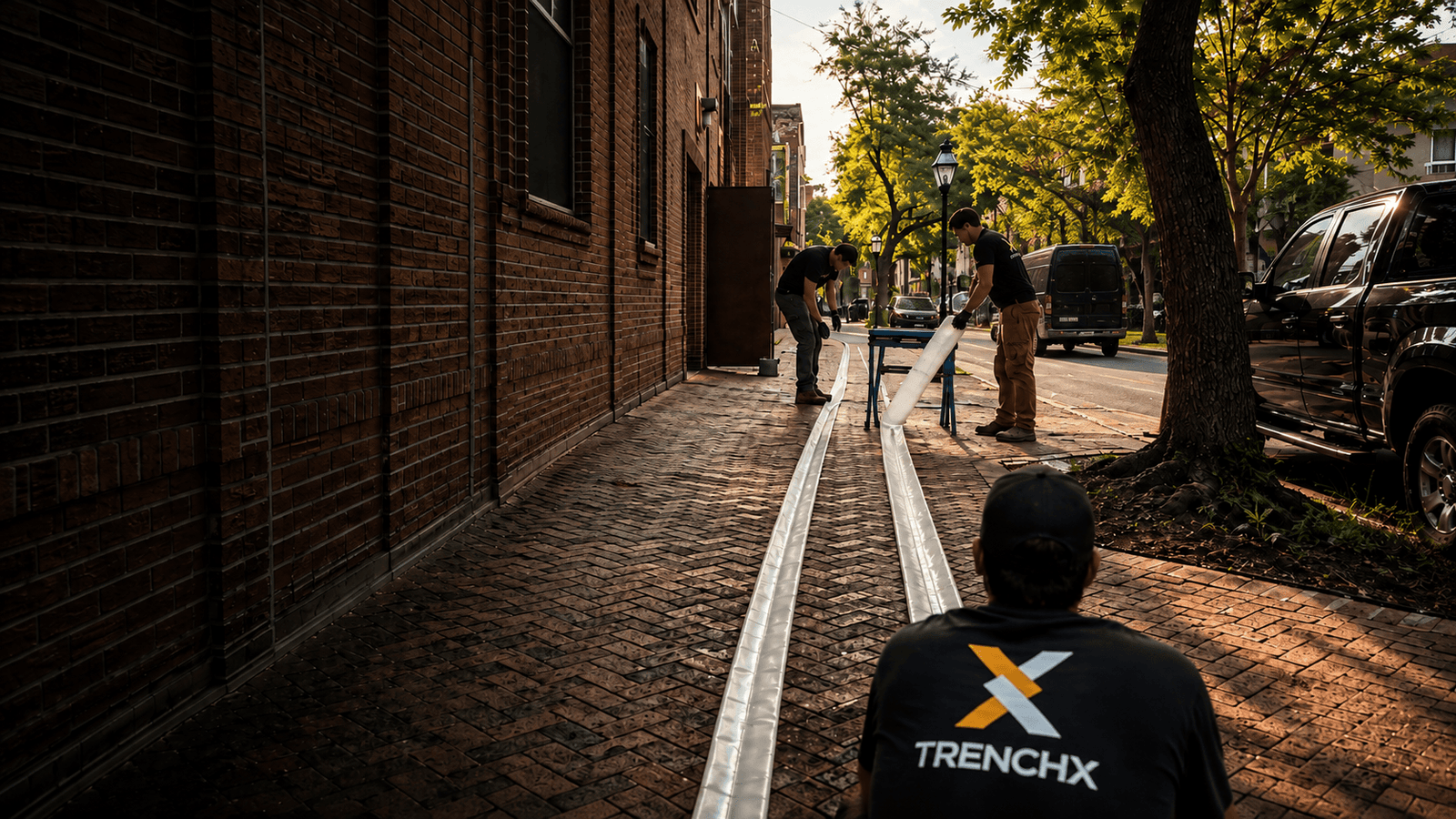
Inspect underground pipe conditions, clear qualifying restrictions, and evaluate lining or other no-dig rehabilitation options around homes, communities, commercial sites, and active properties.
Trenchless pipe repair in Summerville, SC starts with separating a flow restriction from a structural problem. Grease, debris, mineral buildup, roots, damaged joints, localized defects, and deteriorated pipe can create similar symptoms even though the correct repair path may be completely different.
TrenchX can use sewer inspections to document visible conditions and determine where the system needs attention. When accumulated material limits flow or blocks a useful view of the pipe, hydro-jetting and pipeline cleaning can remove qualifying restrictions before the host pipe is evaluated for structural work.
If damage remains after the system is cleaned, CIPP lining can rehabilitate qualifying pipe from within. A more localized defect may support patch lining instead. Building the scope in that order helps avoid treating every backup or slow drain as a reason to replace or rehabilitate more pipe than the documented condition requires.
Different pipe conditions call for different tools. Inspection, cleaning, targeted repair, and structural lining allow the project scope to reflect the actual condition of the system instead of beginning with a predetermined repair method.
Document restrictions, defects, deterioration, and other visible conditions before defining the next step for the underground system.
Explore Service → 02Remove qualifying grease, scale, debris, and accumulated material to restore flow and expose more of the host pipe for evaluation.
Explore Service → 03Structurally renew qualifying existing pipe internally while reducing the need for continuous excavation along the alignment.
Explore Service → 04Install qualifying structural liner systems through a controlled inversion process selected around pipe configuration and access.
Explore Service → 05Reinforce an eligible localized defect without rehabilitating more of the host pipe than the documented damage requires.
Explore Service → 06Use scheduled inspection and cleaning to identify developing restrictions before they become larger sewer or drainage problems.
Explore Service →Cleaning qualifying restrictions can expose the pipe condition that needs to be evaluated before structural work is selected.
Localized damage and broader deterioration should not automatically result in the same rehabilitation scope.
Qualifying no-dig methods can reduce unnecessary excavation around homes, pavement, landscaping, parking, and occupied properties.
Summerville underground pipe projects can involve established neighborhoods, newer residential communities, multi-unit properties, commercial sites, managed buildings, and other active environments where access and everyday use of the property have to remain part of the planning process.
Driveways, parking, landscaping, structures, sidewalks, pedestrian routes, existing utilities, equipment placement, tenant access, and available pipe entry points can all influence how inspection, cleaning, lining, and repair work should be staged.
TrenchX considers those conditions alongside pipe material, diameter, alignment, structural condition, and the extent of the documented damage. When a system qualifies for internal rehabilitation, the field scope can often stay concentrated around defined access areas rather than extending continuous excavation across the property.
Learn How TrenchX Approaches Underground RepairA useful repair plan separates maintenance needs from structural problems before rehabilitation begins. Inspection and preparation help determine what part of the system needs work and how the project should be coordinated around the surrounding property.
Document restrictions, defects, deterioration, and the section of underground pipe where symptoms are occurring.
Remove qualifying buildup where necessary so flow can improve and the host-pipe condition can be evaluated more clearly.
Select maintenance, localized repair, structural lining, or another corrective method based on the documented pipe condition.
Plan access, equipment placement, work areas, and property protection around the repair method and site requirements.
Homes, residential communities, managed properties, commercial buildings, retail environments, offices, and larger facilities rely on underground systems while presenting different access and operating requirements. TrenchX plans the work around both sides of that equation.
TrenchX supports organizations, managed properties, commercial sites, institutional environments, and active facilities where underground infrastructure work has to account for occupants, access, scheduling, traffic, equipment placement, and the normal use of the property continuing above the system.






Summerville connects with TrenchX service areas across Dorchester, Berkeley, and the greater Charleston region. Explore nearby pages for localized information about inspections, hydro-jetting, pipe lining, root-related work, and other trenchless repair options.
Recurring sewer problems do not always mean the pipe itself has failed. Grease, debris, scale, roots, and other restrictions can reduce flow while hiding the structural condition of the host pipe behind them.
Inspection and cleaning help separate those maintenance concerns from cracking, damaged joints, localized defects, deformation, or broader structural deterioration. Pipe material, diameter, access, and the extent of damage then help determine which repair methods are realistic candidates.
These Summerville trenchless pipe repair questions explain how TrenchX moves from flow restoration into structural evaluation so the final repair scope reflects the condition of the system rather than the symptom alone.
Sewer inspection can help determine whether restricted flow is being caused mainly by buildup or whether structural defects are also present. Cleaning may be recommended first when material inside the line limits flow or inspection visibility.
Hydro-jetting can remove qualifying grease, scale, debris, and other material so more of the host pipe can be inspected and properly prepared. The appropriate preparation depends on the condition of the individual system.
CIPP lining can rehabilitate qualifying pipe from within and can reduce the need for continuous excavation. Access points or localized digging may still be required depending on the system configuration and installation method.
In some cases, yes. Patch lining may be considered when an eligible defect is localized and the surrounding host pipe remains serviceable. Inspection helps determine whether the damage is limited enough for a targeted repair.
Qualifying projects can be coordinated around occupied properties. Driveways, parking, pedestrian routes, residents, equipment access, landscaping, and available work areas can all influence how the field plan is developed.
TrenchX supports qualifying residential, multi-residential, commercial, property-management, office, retail, and facility pipe systems. The recommended approach depends on pipe condition, site access, property requirements, and the underground repair scope.