Clear the Restriction
and Inspect Again
Cleaning can restore visibility so the pipe can be checked for the defects that may have contributed to the recurring problem.


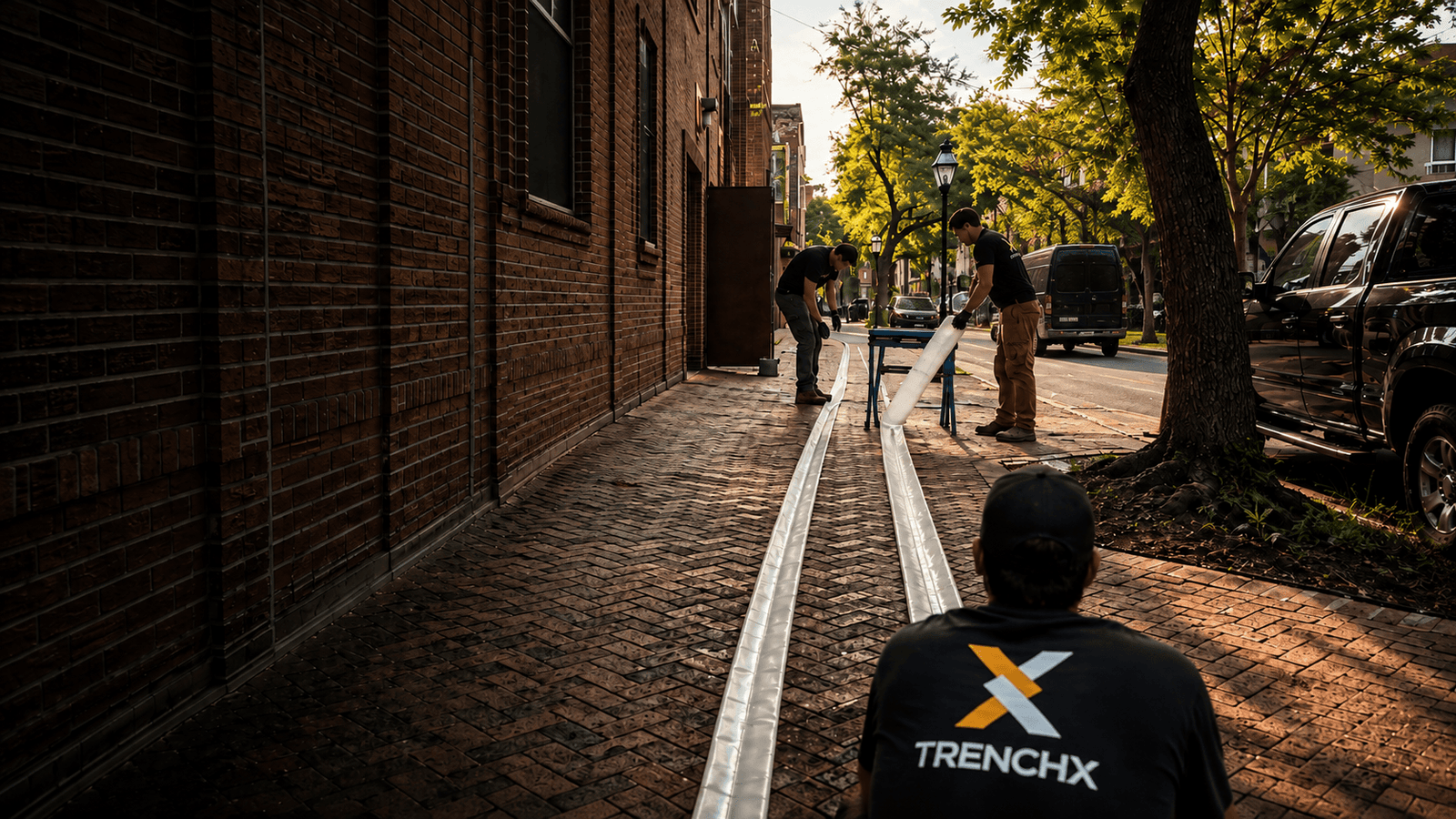
Inspect recurring sewer problems, remove qualifying root and debris restrictions, and evaluate pipe rehabilitation options designed around the condition of the system and the property above it.
Trenchless pipe repair on James Island, SC begins with determining what is affecting the underground system rather than assuming every backup or slow drain is the same problem. Roots, accumulated debris, grease, mineral deposits, damaged joints, localized defects, and structural deterioration can all interfere with sewer performance.
TrenchX can begin with sewer inspections to document visible conditions and identify the section of pipe that needs attention. If intrusive roots or other restrictions are limiting flow, root removal and hydro-jetting and pipeline cleaning can help clear qualifying material and provide a better view of the host pipe.
When cleaning reveals structural damage, rehabilitation options can be evaluated rather than repeatedly treating the obstruction alone. CIPP lining can structurally renew qualifying pipe from within, while patch lining may be appropriate when the defect is localized and the surrounding pipe remains serviceable.
Restoring flow and correcting the underlying defect are not always the same job. TrenchX can move from inspection and cleaning into targeted repair or structural rehabilitation when the condition of the existing pipe calls for it.
Document roots, restrictions, deterioration, defects, and other visible conditions before determining what corrective work is appropriate.
Explore Service → 02Remove qualifying intrusive root growth so flow can be restored and the condition of the underlying pipe can be evaluated more clearly.
Explore Service → 03Clear qualifying grease, debris, scale, and accumulated material that restricts flow or interferes with inspection of the pipe.
Explore Service → 04Rehabilitate a qualifying damaged host pipe internally with a structural liner while reducing continuous surface excavation.
Explore Service → 05Reinforce an eligible localized defect without rehabilitating more of the pipe than the documented condition requires.
Explore Service → 06Use planned cleaning and condition checks to identify developing restrictions before another recurring sewer problem interrupts the property.
Explore Service →Cleaning can restore visibility so the pipe can be checked for the defects that may have contributed to the recurring problem.
Localized damage and broader structural deterioration should not automatically receive the same rehabilitation scope.
Qualifying trenchless methods can reduce continuous excavation around landscaping, pavement, buildings, and other improvements.
James Island pipe work can take place around established homes, residential communities, managed properties, commercial sites, and active buildings where the area surrounding the underground line is already being used every day.
Mature landscaping, driveways, paved areas, fences, structures, parking, equipment access, pedestrian movement, and available pipe entry points can all affect how inspection, cleaning, and rehabilitation work should be staged. A repair method has to make sense for both the pipe and the space available to perform the work.
TrenchX evaluates those property conditions alongside the underground system before the field scope is finalized. When existing pipe qualifies for internal rehabilitation, no-dig methods can help keep the project focused on the damaged infrastructure instead of unnecessarily expanding disturbance across the property.
Learn How TrenchX Approaches Pipe RehabilitationA recurring sewer concern becomes easier to solve once the source, extent, and condition of the underground problem are defined. TrenchX uses those findings to narrow the repair path before equipment and field work are committed to the project.
Document the affected portion of the sewer system and identify visible restrictions, damage, or deterioration.
Remove qualifying roots or buildup when needed so the underlying host-pipe condition can be evaluated more clearly.
Determine whether maintenance, localized repair, structural rehabilitation, or another corrective method fits the pipe.
Coordinate access, equipment placement, property protection, and field logistics around the selected repair method.
Underground systems supporting homes, managed communities, commercial properties, restaurants, retail environments, and larger facilities come with different access and operating requirements. TrenchX adjusts project planning around both the system and the property it serves.
TrenchX supports organizations, managed properties, commercial environments, institutional sites, and active facilities where underground pipe work has to account for occupants, access, scheduling, landscaping, traffic, equipment placement, and the normal use of the property above the system.






James Island is part of a broader TrenchX service network across Charleston County and the surrounding Lowcountry. Explore nearby location pages for more localized information about inspection, cleaning, root removal, pipe lining, and other trenchless repair options.
Roots and recurring sewer restrictions can make an underground pipe problem look straightforward even when the obstruction is only part of the issue. Clearing the line can restore flow without revealing why the same condition developed.
Sewer inspection, host-pipe cleaning, material, diameter, access, structural condition, and the location of defects all influence whether the next step should be maintenance, root removal, localized repair, structural lining, or another rehabilitation method.
These James Island trenchless pipe repair questions explain how TrenchX separates the immediate restriction from the condition of the pipe itself so the recommended scope addresses more than the symptom.
Roots can enter qualifying sewer systems through joints, cracks, or other openings. Removing the roots can restore flow, but the host pipe should also be evaluated to determine whether an underlying defect is allowing the intrusion to return.
When root growth prevents useful inspection, qualifying root removal may be performed so the pipe interior can be viewed more clearly. The condition revealed afterward helps determine whether additional repair or rehabilitation should be considered.
No. A recurring blockage can result from several conditions, including roots, buildup, localized damage, or broader structural deterioration. Inspection helps determine the extent of the problem before replacement or rehabilitation is recommended.
CIPP lining can rehabilitate qualifying pipe from within and can reduce the need for continuous excavation. Some access work may still be required, and the existing pipe must first be evaluated to confirm that lining is appropriate.
Patch lining can be considered when an eligible defect is localized and the surrounding pipe remains suitable. Inspection is important because a localized repair only makes sense when the broader host pipe does not require full-length rehabilitation.
TrenchX supports qualifying residential, multi-residential, property-management, commercial, food-and-beverage, retail, and facility pipe systems. The recommended solution depends on the condition of the pipe, site access, and the operating needs of the property.