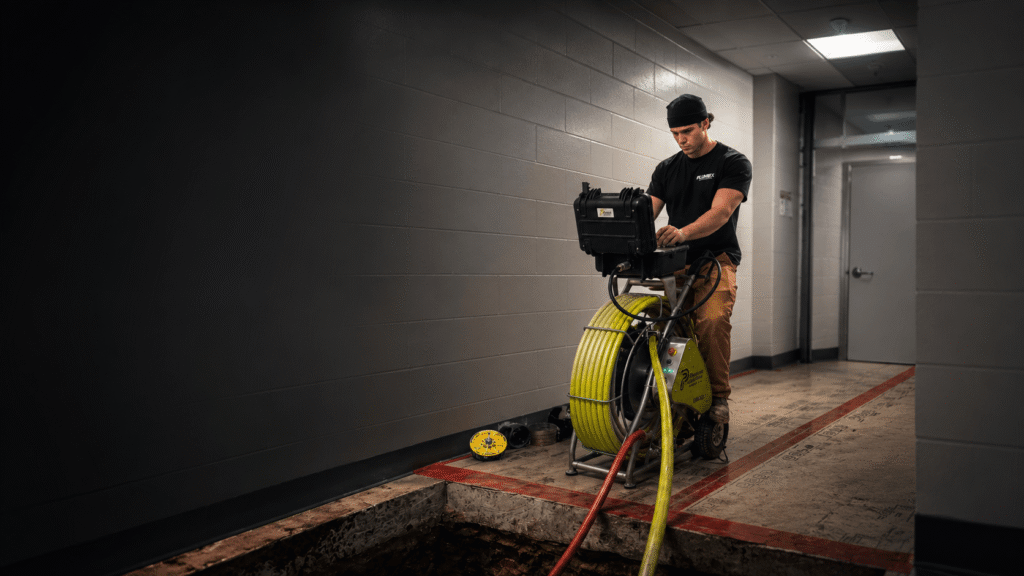
A sewer camera inspection can show much more than whether a pipe is simply “open” or “blocked.” When used as part of a condition-first evaluation, the camera can help document what is happening inside an underground pipe before cleaning, rehabilitation, replacement, or another repair method is selected.
For property owners, facility teams, property managers, and project stakeholders, that information matters. Recurring backups, slow drainage, unexplained odors, infiltration, or repeated service calls can all point to an underground problem, but the same symptom can come from very different conditions.
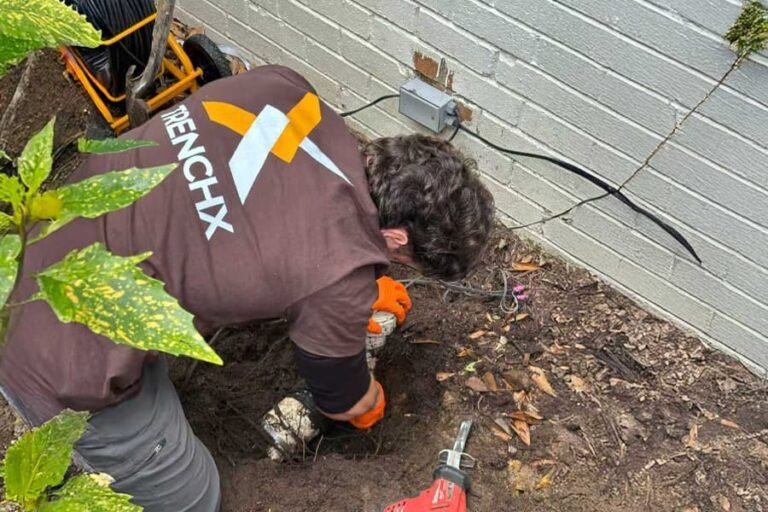
A sewer camera inspection in Charleston, SC gives TrenchX a way to look inside qualifying sewer and underground drainage systems, document visible conditions, and build the next step around what the pipe actually shows.
Why Inspection Should Come Before Repair
Underground pipe work becomes much easier to plan when the condition is known before a repair method is chosen.
A recurring backup may come from grease, sediment, roots, a failed joint, deformation, structural deterioration, or an obstruction farther down the system. From the surface, several of those problems can look almost identical.
That is why sewer inspections are often the starting point for a larger underground pipe evaluation. Instead of assuming that the line needs cleaning, lining, or replacement, inspection helps narrow down the actual condition first.
Once the visible condition is documented, TrenchX can compare those findings with pipe material, diameter, access, alignment, property use, and project requirements.
The result is a repair plan based on evidence rather than symptoms alone.
What a Sewer Camera Can Show Inside the Pipe
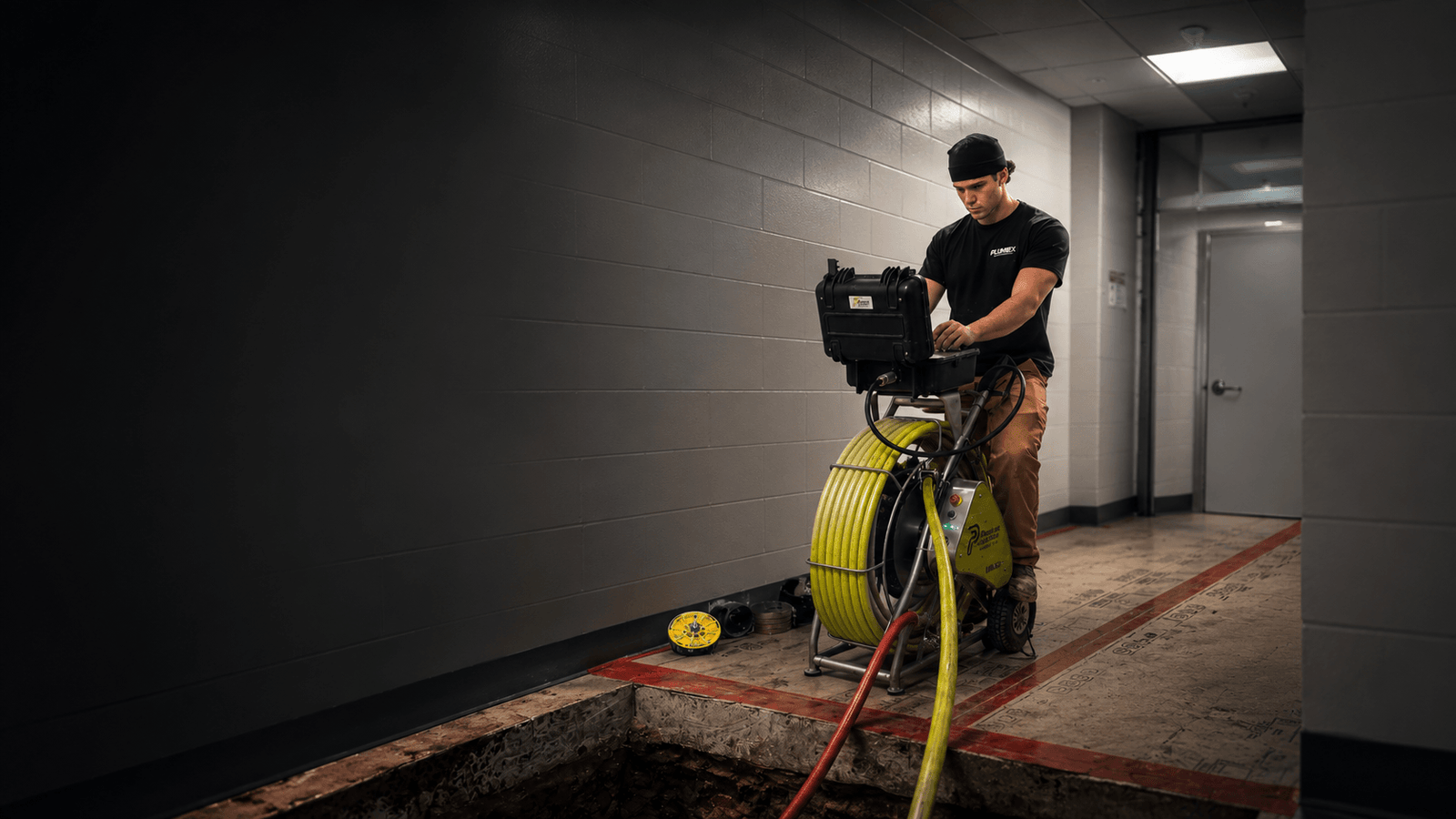
A sewer camera travels through the pipe and records the interior condition along the inspected run. What can be documented depends on visibility, access, pipe geometry, system condition, and the limits of the inspection, but several common categories of concern can often be identified.
These findings can help determine whether the system needs cleaning, monitoring, localized repair, structural rehabilitation, replacement, or further evaluation.
Root Intrusion
Roots can enter underground sewer lines through joints, cracks, openings, or other vulnerable points. Once inside, they can restrict flow and collect paper, grease, debris, and other material.
Camera inspection can help show where visible root intrusion is occurring and whether the problem appears localized or extends through multiple sections of pipe.
If roots interfere with inspection or usable flow, sewer root removal may be considered before the pipe is evaluated again.
Removing the roots is not necessarily the end of the project. The condition that allowed the roots to enter still needs to be understood.
Grease, Scale, Sediment and Buildup
A pipe can perform poorly even when the structure itself remains serviceable. Grease, mineral scale, sediment, debris, and other buildup can reduce the usable diameter of the line and interfere with drainage.
Buildup can also block the camera’s view of the host pipe. If the wall cannot be seen clearly, the inspection may not provide enough information to judge the underlying condition.
In those situations, hydro-jetting and pipeline cleaning may be used to address qualifying buildup before another inspection is performed.
Cleaning can therefore serve two purposes: improving flow and preparing the pipe for a more useful condition assessment.
Cracks and Structural Deterioration
Visible cracking can be important because it may indicate that the pipe wall is beginning to lose structural integrity.
However, not every crack means the same thing. Location, extent, surrounding deformation, pipe material, and the overall condition of the run can all affect how the finding should be interpreted.
Inspection helps document the visible defect so that rehabilitation options can be compared with the actual condition instead of selected in advance.
A qualifying pipe may later be evaluated for CIPP lining , localized reinforcement, or another structural repair method.
Joint Separation and Misalignment
Underground pipe systems contain joints where sections connect. Movement, aging, installation conditions, soil activity, or structural change can cause some of those connections to separate or become misaligned.
A camera inspection may reveal offsets, openings, irregular transitions, or other visible joint concerns.
These conditions matter because they can influence flow, create locations where debris collects, allow roots to enter, or affect whether a particular rehabilitation method can be installed successfully.
The severity and location of the condition help determine whether the issue should be monitored, repaired locally, rehabilitated, or approached another way.
Pipe Deformation
Some pipe materials can lose their original shape over time. A line may become oval, flattened, displaced, or otherwise deformed.
Deformation can affect both hydraulic performance and structural rehabilitation planning.
For example, a pipe that no longer maintains usable geometry may not support the same repair options as a structurally stable host pipe.
That is one of the reasons TrenchX evaluates geometry and condition together rather than assuming that every deteriorated line should be lined.
Localized Failures
Not every damaged sewer line requires full-length rehabilitation.
Inspection may show that most of the pipe remains serviceable while one smaller area contains a qualifying structural defect.
In that situation, patch lining may be considered instead of rehabilitating the entire run.
A localized approach can be especially useful when the scope of repair can be matched closely to the documented scope of the problem.
Collapsed or Severely Failed Pipe
Camera inspection can also reveal conditions where rehabilitation may no longer be appropriate.
Severe deformation, missing pipe, collapse, major structural loss, or an impassable section can change the project from rehabilitation to replacement.
In qualifying situations, pipe bursting may be considered as a trenchless replacement method.
The important distinction is that inspection helps establish whether the existing pipe should be preserved at all.
A Camera Inspection Can Also Show Where the Problem Is
Finding a defect is useful. Knowing where it occurs is even more useful.
A documented inspection can help project teams understand where a visible concern is located along the inspected run. That information can influence access planning, excavation limits, localized repair, cleaning strategy, and the overall project scope.
This is particularly important when the line runs beneath driveways, buildings, parking areas, landscaped spaces, commercial interiors, or other developed surfaces.
The more precisely the condition is understood, the more intelligently the work can be planned around the property above it.
Why the Pipe May Need Cleaning Before Inspection
One of the most important limitations of camera inspection is simple: the camera can only document what it can see.
Heavy grease, sediment, roots, debris, standing material, or other obstructions may prevent the camera from clearly viewing the pipe wall.
In that situation, inspection before cleaning may identify that a restriction exists without revealing the full condition underneath it.
Cleaning the line and inspecting it again can create a much better basis for planning repair.
This sequence is especially useful when TrenchX needs to evaluate whether a host pipe is suitable for CIPP lining, patch repair, coating, or another rehabilitation method.
Inspection Does Not Automatically Mean the Pipe Needs Repair
An inspection is a diagnostic step, not a commitment to rehabilitation.
Sometimes the camera shows buildup that can be addressed through cleaning. Other times, it reveals a localized defect that may need targeted repair. In another system, the pipe may show widespread structural deterioration.
There are also situations where monitoring and preventive maintenance may make more sense than immediate structural work.
That flexibility is one of the main benefits of inspecting first. The scope of the next step can be matched to the condition rather than predetermined.
Inspection Helps Compare CIPP Lining and Pipe Bursting
Two of the most important trenchless options TrenchX evaluates are CIPP lining and pipe bursting.
CIPP lining rehabilitates a qualifying existing host pipe from the inside. Pipe bursting replaces a qualifying failed pipe while generally following the established underground alignment.
Camera findings can help determine which direction deserves further consideration.
If the host pipe remains suitable for structural rehabilitation, lining may remain an option. If the existing pipe has deteriorated beyond a practical rehabilitation condition, replacement may become more appropriate.
TrenchX explains that comparison in more detail in the guide: CIPP Lining vs. Pipe Bursting: Which Trenchless Repair Fits the Pipe?
Pipe Size Can Change What Happens After Inspection
The inspection may identify the same type of defect in two different pipes, but that does not mean the repair project will look the same.
Diameter affects access, equipment, structural requirements, rehabilitation design, and project logistics.
TrenchX provides dedicated information for 2-inch to 8-inch no-dig pipe repair on qualifying smaller-diameter systems.
Larger systems can be evaluated through the 12-inch to 36-inch no-dig pipe repair program.
The camera helps document the condition. Pipe size helps determine how that condition can be addressed.
Commercial and Managed Properties Need More Than a Defect List
On an occupied or operating property, underground pipe planning involves more than identifying damage.
Property managers, facility teams, and commercial operators may also need to consider access windows, tenants, customers, traffic, parking, production, sanitation, utilities, and other site constraints.
For property management and facility environments , inspection can help move the conversation from an unexpected service issue toward a planned underground project.
The documented condition becomes the starting point for scope, access, scheduling, and rehabilitation decisions.
Inspection Can Support Preventive Planning Too
Sewer camera inspection is not only useful after a failure.
Recurring condition assessments can help high-use commercial drains, mature-tree properties, aging sewer systems, multi-building sites, and infrastructure portfolios identify developing concerns earlier.
Comparing inspection findings over time can help determine whether a visible condition is stable, worsening, or beginning to interfere with system performance.
That can support cleaning schedules, root management, maintenance planning, capital budgeting, and rehabilitation prioritization.
In other words, the camera can help answer both “What failed?” and “What should we watch next?”
What a Sewer Camera Inspection Cannot Do by Itself
A camera inspection is powerful, but it is still one part of the evaluation.
The camera documents visible interior conditions. It does not automatically determine every external soil condition, structural load, groundwater issue, utility conflict, or project constraint surrounding the pipe.
Some systems may also require cleaning, locating, access work, leak evaluation, or other diagnostic steps.
If unexplained water loss, infiltration, or hidden leakage is part of the concern, leak detection and sealing may provide additional information.
The most useful project plan combines the inspection findings with the physical pipe, the surrounding property, and the actual project objective.
Sewer Camera Inspection in Charleston, SC
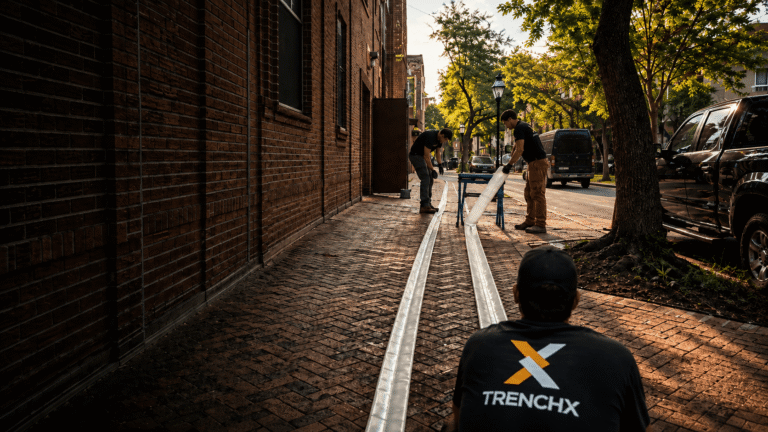
Charleston-area properties present a wide range of underground conditions. Older neighborhoods, mature trees, commercial corridors, multi-residential properties, institutional facilities, brick and paved surfaces, and active buildings can all influence how underground work should be planned.
TrenchX evaluates qualifying systems in Charleston , North Charleston , Mount Pleasant , Summerville , and surrounding Lowcountry communities.
The objective remains consistent: inspect the system, document the condition, and then determine which next step fits the pipe and property.
A camera inspection should not begin with the question, “Which repair are we selling?” It should begin with, “What does the underground system actually show?”
Inspection & Diagnostics
Frequently Asked Questions About Sewer Camera Inspections
Camera inspection can help document underground pipe conditions before cleaning, rehabilitation, or replacement decisions are made.
What can a sewer camera inspection find?
A sewer camera inspection can help document visible conditions such as roots, buildup, cracking, joint separation, deformation, obstructions, localized failures, structural deterioration, and other concerns inside a qualifying pipe.
Can a sewer camera inspection tell whether I need pipe lining?
Inspection can provide important information about whether a host pipe may be suitable for further evaluation for CIPP lining or another rehabilitation method. Pipe material, geometry, access, structural condition, and project requirements must also be considered.
Should a sewer line be cleaned before a camera inspection?
Not always. However, grease, roots, sediment, scale, or debris can limit visibility. If the pipe wall cannot be clearly documented, cleaning may be recommended before the system is inspected again.
Can a sewer camera locate the exact area of a pipe problem?
Inspection can help document where visible concerns occur along an inspected run. The amount of location information available depends on the equipment, access, system geometry, and project conditions.
Does finding a defect mean the whole sewer line needs replacement?
No. Some conditions may require cleaning or monitoring, while others may qualify for localized repair, CIPP rehabilitation, pipe bursting, or another method. The appropriate scope depends on the documented condition and project requirements.
Does TrenchX perform sewer camera inspections in Charleston?
TrenchX evaluates qualifying underground sewer and drainage systems in Charleston and surrounding South Carolina Lowcountry communities. Inspection findings can help guide cleaning, maintenance, rehabilitation, and replacement planning.
See the Pipe Before Building the Repair Plan
Underground pipe symptoms do not always tell you what the problem is. Inspection helps turn those symptoms into documented information.
The camera may reveal buildup, roots, a localized defect, structural deterioration, deformation, or a pipe that has reached the point where replacement deserves consideration.
Once the condition is understood, TrenchX can compare the appropriate next steps around the pipe, access, property, and project requirements.