Commercial sewer rehabilitation is rarely just a pipe problem. The underground condition matters, but so do the people, operations, access, traffic, tenants, customers, equipment, and finished surfaces above it.
That is why commercial sewer rehabilitation in Charleston, SC should begin with more than selecting a repair method. The project needs to account for the pipe itself and the environment where the work will take place.
TrenchX uses a condition-first approach to evaluate qualifying commercial, institutional, multi-residential, and facility pipe systems before cleaning, rehabilitation, replacement, or another underground repair method is selected.
Start With the Pipe Condition
A recurring backup, slow drain, infiltration concern, or repeated service issue does not automatically reveal what is wrong underground.
The cause may involve grease, roots, sediment, failed joints, deformation, structural deterioration, or a localized defect.
For that reason, sewer inspection is often an important first step.
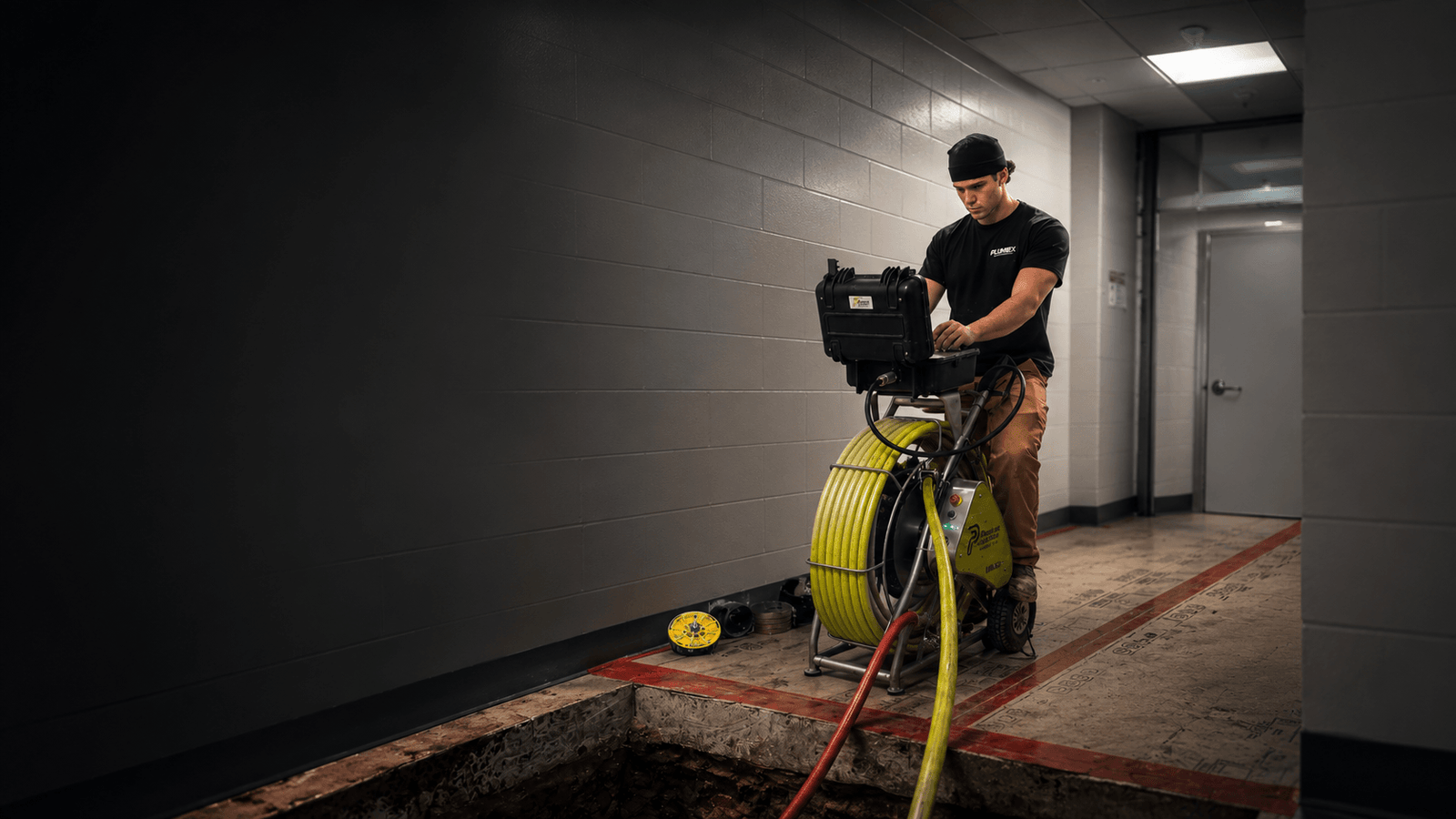
Inspection can help document visible defects, restrictions, alignment, connections, and other conditions inside the line before the repair plan is built.
Commercial Properties Add Another Layer of Planning
Even when the underground condition is clear, the project may still be complicated by what happens above the pipe.
Commercial and institutional sites can include occupied buildings, customer areas, parking lots, loading zones, kitchens, production spaces, campuses, offices, mechanical rooms, and shared utilities.
Those conditions can influence access, staging, scheduling, equipment placement, temporary service interruptions, and how much surface disturbance is acceptable.
The repair method therefore needs to fit both the pipe and the property.
Inspection Helps Define the Scope Before Work Begins
A documented inspection can help identify whether the concern is localized or extends through a longer section of pipe.
That distinction matters because a single failed joint may call for a very different response than widespread structural deterioration.
If buildup prevents a clear view, hydro-jetting and pipeline cleaning may be needed before the host pipe is evaluated again.
Once the system is visible, the project team can compare maintenance, localized repair, structural rehabilitation, and replacement options more accurately.
Cleaning May Solve the Problem Without Rehabilitation
Not every commercial sewer problem requires structural repair.
High-use systems can collect grease, sediment, roots, scale, and other restrictions that reduce usable flow while the host pipe remains serviceable.
In those situations, cleaning may restore performance without requiring lining or replacement.
For sites with recurring buildup, preventive maintenance may help reduce repeat emergency calls and create a more predictable service schedule.
When Commercial Pipe May Need CIPP Rehabilitation
Structural defects can change the project from maintenance to rehabilitation.
CIPP lining may be considered when the existing host pipe remains suitable for internal structural rehabilitation.
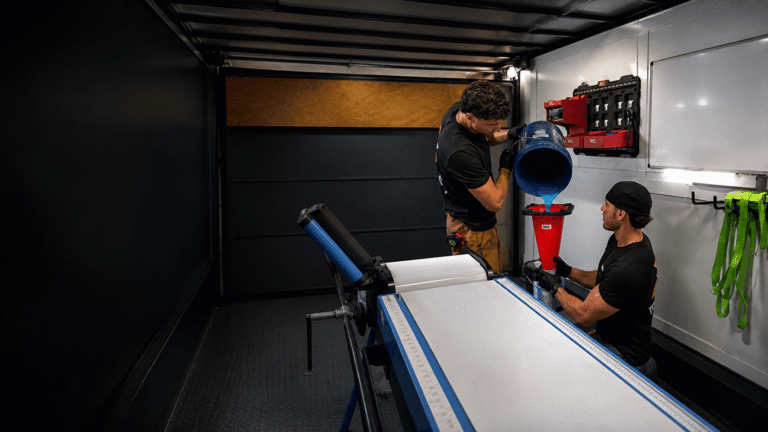
A resin-saturated liner is installed through existing or planned access and cured inside the original pipe to create a structural liner.
Because the existing alignment is preserved, CIPP can reduce the need to open the entire pipe route through floors, pavement, landscaping, or other developed surfaces.
Reducing Surface Disruption Can Matter More on Commercial Sites
Excavation has consequences beyond the trench itself.
Opening pavement may affect parking or traffic. Interior excavation can interfere with employees, tenants, customers, equipment, or production. Landscape disturbance can create restoration work after the underground repair is complete.
Trenchless methods can reduce some of that disruption when the pipe condition supports their use.
The objective is not to avoid excavation at any cost. It is to use the repair method that addresses the underground condition while respecting the property above it.
Localized Defects May Not Need Full-Length Lining
Inspection may show that most of the pipe remains serviceable while one smaller area contains a qualifying structural defect.
In that situation, patch lining may be considered instead of rehabilitating the entire run.
Matching the scope of repair to the documented defect can help keep the project focused.
This is especially useful on commercial properties where unnecessary expansion of the work area can increase disruption and coordination needs.
When Replacement May Be the Better Option
Some underground pipes have deteriorated beyond a practical rehabilitation condition.
Severe collapse, major deformation, structural loss, missing sections, or other conditions may require replacement rather than lining.
In qualifying situations, pipe bursting may replace a failed pipe along the existing alignment while reducing the need for continuous open-trench excavation.
Planned access points are still required, but the surrounding property may experience less disturbance than with a full-length trench.
Access Planning Can Make or Break the Project
Underground access is not always located where it is most convenient for the property.
Existing cleanouts, manholes, interior access points, mechanical areas, parking lots, loading zones, or landscape areas may all influence how crews reach the pipe.
Limited staging space can also affect equipment placement and project sequencing.
TrenchX evaluates those access conditions alongside the pipe itself so the repair method can be planned around the actual site.
Operating Hours and Occupancy Should Be Part of the Plan
A repair method can be technically appropriate and still create unnecessary problems if the work is scheduled without considering operations.
Restaurants may need to coordinate around kitchen use. Offices may need access maintained during business hours. Multi-residential buildings may require communication around shared systems. Facilities may have restricted access or critical operating schedules.
Those considerations should be identified before mobilization begins.
The underground solution and the property schedule need to work together.
Property Management Projects Need Repeatable Information
For property management , one sewer problem may be part of a much larger infrastructure portfolio.
Inspection records can help property teams understand which assets need cleaning, monitoring, localized repair, or structural rehabilitation.
That information can also support budgeting and maintenance planning across multiple properties rather than treating every backup as an isolated event.
A condition-first system creates a more useful record of what is actually happening underground.
Multi-Residential Properties Have Shared-System Challenges
Multi-residential properties often rely on shared drainage and sewer systems serving many occupants.
A problem in one section can affect multiple units, common areas, or building operations.
This makes accurate inspection, communication, access planning, and repair sequencing especially important.
Reducing unnecessary excavation can also help limit disruption around residents, walkways, parking areas, and common spaces.
Food and Beverage Properties Need Strong Maintenance Planning
Food and beverage properties can place heavy demands on drainage systems.
Grease and organic buildup can create recurring restrictions long before a structural problem develops.
Routine inspection and cleaning can help determine whether the system is dealing with a maintenance concern or whether a developing defect deserves further evaluation.
That distinction can help avoid treating every backup as a structural failure.
Facilities May Need a Longer-Term Infrastructure View
Facilities can contain extensive underground pipe networks with varying ages, materials, diameters, and access conditions.
In those environments, individual repairs may need to fit into a larger maintenance or capital-planning strategy.
Inspection records, condition monitoring, and preventive maintenance can help identify which sections deserve attention first.
That creates a more structured approach than waiting for individual failures to determine the project schedule.
Pipe Diameter Changes Commercial Rehabilitation Planning
Commercial underground systems can range from smaller service lines to large sewer and stormwater infrastructure.
TrenchX evaluates 2-inch to 8-inch no-dig pipe repair for qualifying smaller-diameter systems.
Larger commercial and infrastructure applications may fall within 12-inch to 36-inch no-dig pipe repair .
Diameter can change equipment, access, structural requirements, liner design, flow considerations, and overall project logistics.
Manholes Can Be Part of the Same Underground Problem
Commercial sewer systems are not made up of pipe alone.
Manholes can develop cracks, infiltration, deteriorated surfaces, failed joints, and other conditions that affect the surrounding collection system.
Manhole rehabilitation may be evaluated alongside pipeline work when the connected structures also need attention.
Looking at the broader underground system can help prevent one deteriorated component from being ignored while another is repaired.
Preventive Maintenance Can Turn Emergencies Into Planned Work
Commercial properties often have more to lose when underground pipe problems become emergencies.
Unexpected closures, tenant disruption, customer impacts, water damage, access restrictions, and emergency mobilization can all increase the cost of a sewer problem.
Preventive maintenance programs can combine inspection, cleaning, root management, and condition monitoring on a planned schedule.
Over time, those records can help identify developing problems before they dictate the timing of the next project.
Commercial Sewer Rehabilitation Should Follow a Clear Process
A practical planning sequence can keep the project focused.
- Document the condition. Inspect the underground system and identify the visible problem.
- Address preparation needs. Clean or remove restrictions when necessary so the host pipe can be properly evaluated.
- Compare repair options. Determine whether the condition supports maintenance, localized repair, lining, or replacement.
- Evaluate access. Identify cleanouts, manholes, access pits, staging areas, and surrounding site constraints.
- Coordinate operations. Plan around occupants, customers, employees, traffic, parking, and other property requirements.
- Verify the completed work. Document the final condition and establish any future maintenance needs.
Commercial Sewer Rehabilitation in Charleston, SC
Commercial properties throughout Charleston and the surrounding Lowcountry can present complex underground conditions.
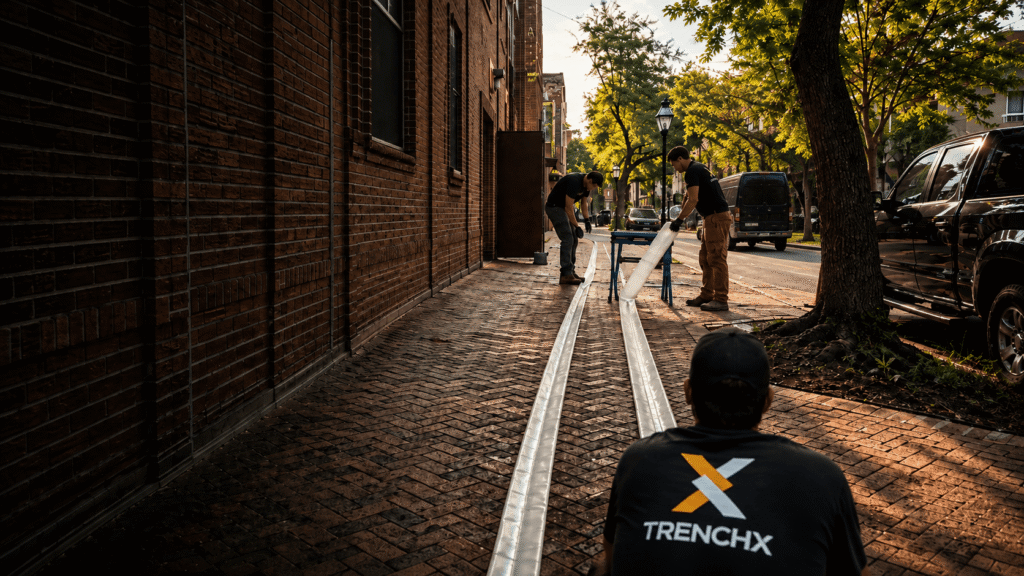
Historic development, brick and paved surfaces, mature landscaping, active commercial corridors, multi-residential properties, institutional sites, and limited access can all affect how sewer rehabilitation should be planned.
TrenchX evaluates qualifying systems in Charleston , North Charleston , Mount Pleasant , Summerville , and surrounding service areas.
The process starts by understanding the underground system and the property that depends on it.
Commercial sewer rehabilitation is not only about choosing a pipe repair. It is about building a repair plan that works underground without losing sight of how the property operates above it.
Commercial Pipe Planning
Frequently Asked Questions About Commercial Sewer Rehabilitation
Commercial sewer work should account for pipe condition, access, operations, property use, and the repair method itself.
What is commercial sewer rehabilitation?
Commercial sewer rehabilitation includes cleaning, localized repair, structural lining, replacement, maintenance, and other methods used to restore qualifying sewer and underground drainage systems. The appropriate approach depends on the documented pipe condition and project requirements.
Can commercial sewer pipe be repaired without excavating the entire line?
In qualifying situations, trenchless methods such as CIPP lining, patch lining, or pipe bursting can reduce the need to excavate the full pipe route. Planned access and other site work may still be required.
Should a commercial sewer line be inspected before rehabilitation?
Inspection is often an important first step because it can document buildup, roots, cracking, failed joints, deformation, structural deterioration, and other conditions that influence the repair plan.
Can TrenchX work around an occupied commercial property?
TrenchX evaluates access, staging, occupancy, operating schedules, traffic, property use, and other site conditions when planning qualifying commercial underground pipe projects. The project plan depends on the actual system and property.
Is preventive sewer maintenance useful for commercial properties?
Yes. Qualifying commercial systems may benefit from recurring inspection, cleaning, root management, and condition monitoring to identify developing concerns and reduce reliance on emergency response.
Does TrenchX provide commercial sewer rehabilitation in Charleston?
TrenchX evaluates qualifying commercial, multi-residential, institutional, facility, and other underground pipe systems in Charleston and surrounding South Carolina Lowcountry communities.
Build the Repair Around the Pipe and the Property
Commercial sewer problems can affect much more than underground flow.
The right project needs to account for pipe condition, access, operations, occupants, surface improvements, scheduling, and the repair method itself.
TrenchX can inspect and evaluate qualifying commercial underground systems throughout Charleston and the surrounding Lowcountry, then build the next step around the documented condition.